Why Is Acoustic Treatment Important?

Acoustic treatment is not merely about making a room quieter. It shapes how sound reflects, travels, and reaches the listener. In a meeting room, untreated reflections can blur speech; in a home studio, they can make a recorded voice sound hollow. The World Health Organization’s Guidelines for Community Noise recommend that classroom background noise not exceed 35 dB LAeq during teaching. This is a useful benchmark, not a universal target for every room. A classroom, podcast booth, and restaurant have different acoustic needs. That matters.

Treatment typically uses absorptive, diffusive, or bass-control materials to manage specific sound problems. It can reduce flutter echo and shorten excessive reverberation, but it cannot make every space silent. ISO 3382-2 describes methods for measuring reverberation time in ordinary rooms, giving designers a way to assess results rather than rely only on appearance. A thick panel may look effective and still miss the room’s main problem. Placement and material choice matter. So does testing.

Good acoustic treatment supports clearer conversation, more reliable recordings, and a more comfortable listening environment. The best approach starts with the room’s purpose, dimensions, and existing surfaces. There is a limitation worth admitting: adding panels without measuring or listening carefully can create an uneven result, sometimes leaving a room oddly dull. Thoughtful treatment is not decoration alone. It is a practical, testable part of room design.
Why Is Acoustic Treatment Important?

What Acoustic Treatment Is and How It Works

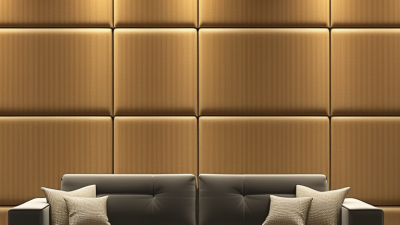
Acoustic treatment shapes sound inside a room; it does not stop sound from passing through walls. Absorptive panels, ceiling clouds, and soft furnishings reduce reflections by converting some sound energy into heat. Diffusers scatter reflections rather than simply absorbing them. The result can be clearer speech and less lingering echo, especially in rooms with hard floors, bare walls, and high ceilings. Small changes matter.

The room itself guides the treatment. In a home office, a clap may produce a sharp flutter between parallel walls; a few well-placed absorbers can soften it. But covering every surface may make speech feel unnaturally dull. ANSI/ASA S12.60-2010/Part 1 sets a reverberation-time limit of 0.6 seconds for unoccupied core learning spaces up to 10,000 cubic feet, alongside a 35 dBA background-noise limit. These are classroom criteria, not universal targets. OSHA’s occupational noise standard sets an 8-hour permissible exposure limit of 90 dBA, but room treatment is not a substitute for hearing protection or sound isolation. Measure the room, identify the problem, then choose materials and placement accordingly.
How Room Surfaces Affect Sound

Why Is Acoustic Treatment Important?

How Room Surfaces Affect Sound

Sound does not disappear when it leaves a speaker or a person’s mouth. It reflects from glass, painted drywall, tile, and other hard surfaces, then reaches the listener slightly later. In a bare room, those overlapping reflections can blur speech and make music feel harsh. You may notice it at a kitchen table: a short comment seems to linger after the speaker stops. That matters.

Absorptive materials, such as thick curtains or properly placed acoustic panels, reduce some reflections. Their effect depends on material, thickness, coverage, and sound frequency; a thin rug will not control every echo.

The ANSI/ASA S12.60 classroom acoustics standard sets a maximum reverberation time of 0.6 seconds for furnished, unoccupied classrooms up to 10,000 cubic feet, and 0.7 seconds for rooms between 10,000 and 20,000 cubic feet.

These are classroom targets, not universal home requirements. A room can also become too acoustically “dead” if absorption is added without considering its use. I have to admit, panel placement is often guessed at; a few panels may improve one listening spot while leaving reflections elsewhere. Check the room’s actual sound before treating every surface.

How Acoustic Treatment Improves Listening and Communication

Why Is Acoustic Treatment Important?

How Acoustic Treatment Improves Listening and Communication

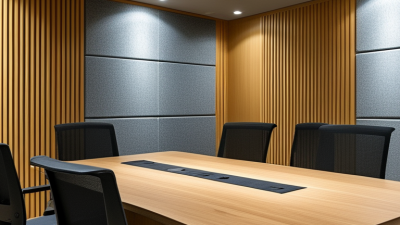
Acoustic treatment helps control reflections that blur speech and music inside a room. In a bare meeting room, a speaker’s words may bounce off glass, walls, and a hard table. The result can sound smeared, even when the speaker is clear. A few well-placed absorptive panels or a rug can reduce those reflections. That matters. Listeners often follow conversation with less effort when voices sound distinct, especially during long calls or group discussions.

For music, treatment can make details easier to hear without turning up the volume. A bass note that lingers in one corner may mask quieter sounds nearby. Soft furnishings and carefully positioned panels can help, though every room behaves differently. Small changes help. Treatment is not soundproofing; it will not stop traffic noise from coming through a thin window. And more absorption is not always better. An overly damped room can feel unnatural, with voices losing warmth. It is worth testing changes by listening from several seats and asking others whether speech feels clearer. A room can still have flaws, and noticing them is part of improving it.

Why Is Acoustic Treatment Important?

How room acoustics affect listening and communication

Lower-frequency sounds have longer wavelengths and can be harder to control in a room; higher-frequency reflections can make speech and music sound less clear. Thoughtful acoustic treatment helps manage reflections and resonances, supporting more comfortable listening and clearer communication. Wavelengths shown are calculated using the approximate speed of sound in air at 20°C (343 m/s).

Where Acoustic Treatment Is Most Useful

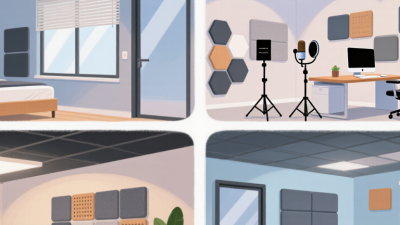
Acoustic treatment is most useful wherever sound reflects off hard surfaces and makes speech difficult to follow. In a home office, a bare desk, glass window, and painted walls can create a hollow echo during video calls. A rug, curtains, and a few well-placed absorptive panels can make voices clearer without changing the room’s purpose. Small changes matter.

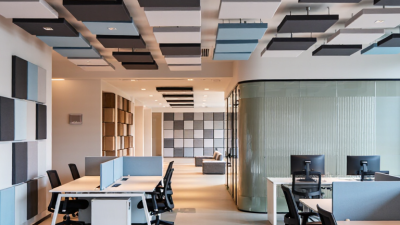
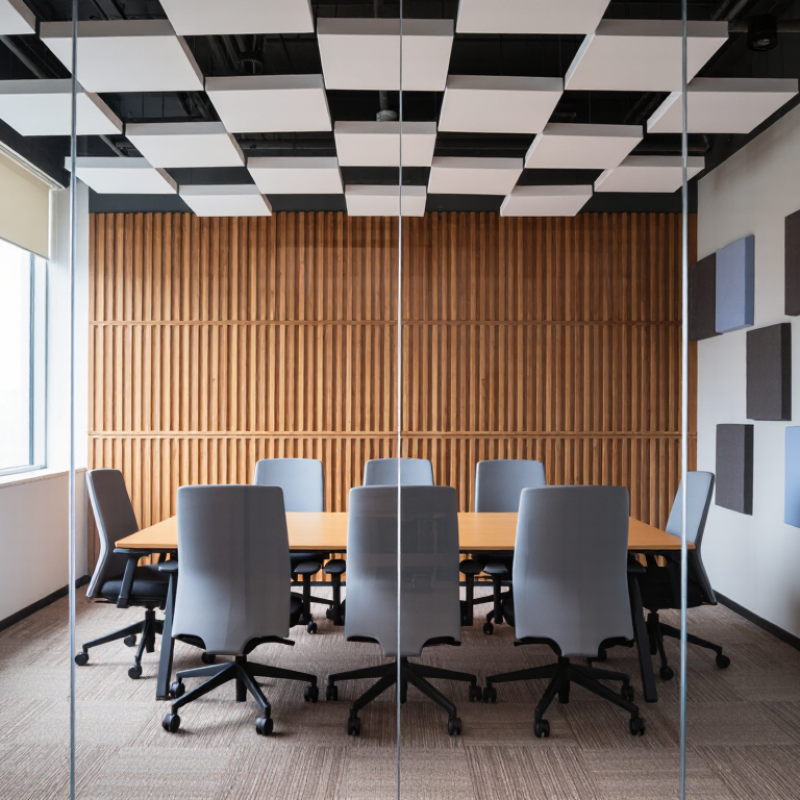
Shared workplaces benefit too. In a meeting room, reflections can blur quiet comments, especially when several people speak from different seats. Treating parts of the ceiling and walls can reduce that muddiness. In classrooms, clearer speech helps students hear instructions from the back row, while libraries and healthcare reception areas often need less distracting background chatter. Restaurants may use upholstered seating or ceiling panels to soften the clatter of dishes. The goal is not silence.

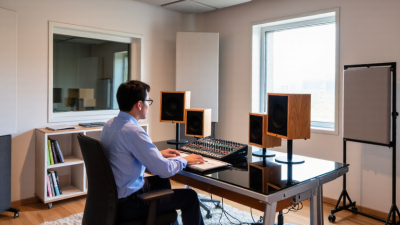
Recording rooms need careful attention because microphones capture reflections that listeners may barely notice. Panels near the microphone and at strong reflection points can help, but covering every surface may make a room feel unnaturally dull. It is easy to overdo it; I would check the sound from several seats before adding more material. Acoustic treatment also does not block sound from entering or leaving a room. That requires different construction choices.

Why Is Acoustic Treatment Important? — Where Acoustic Treatment Is Most Useful
Space Common Acoustic Problem Useful Treatment Why It Helps Practical Consideration
Recording and podcast rooms Strong reflections and excessive reverberation can make speech or instruments sound uneven or unclear. Broadband absorbers at key reflection points; bass absorbers where low-frequency buildup is present. Reduces room coloration and makes recorded sound easier to control during mixing or editing. Keep some natural liveliness; covering every surface with absorption can make a room sound unnaturally dead.
Classrooms and lecture rooms Long reverberation and echoes can reduce speech intelligibility, especially for listeners farther from the speaker. Ceiling absorbers, wall panels, and—in suitable rooms—sound-absorbing floor finishes. Helps speech reach listeners more clearly and can reduce the effort required to follow lessons. Room size, occupancy, background noise, and applicable building guidance all affect the appropriate reverberation target.
Open-plan offices Conversations and equipment noise can travel across the space and distract nearby workers. Ceiling absorption, absorptive screens, and soft finishes; sound masking may be considered separately. Limits sound buildup and can reduce the distance that reflected speech remains disturbing. Absorption improves the room’s sound field but does not, by itself, provide sound isolation between work areas.
Restaurants and cafés Hard surfaces and busy conversation can create a noisy, reverberant dining environment. Acoustic ceiling treatment, wall absorbers, and upholstered or other soft furnishings. Reduces reflected sound and may make conversation more comfortable at typical seating distances. Choose materials suitable for cleaning, fire-safety requirements, and the space’s moisture and food-service conditions.
Home theaters and media rooms Early reflections, flutter echoes, or uneven bass can make dialogue and music less consistent across seats. Absorption at selected reflection points, bass traps, and carefully placed diffusion where appropriate. Improves clarity and helps create a more consistent listening experience within the room. Placement and room layout matter; excessive absorption can reduce spaciousness and does not correct every low-frequency problem.
Gymnasiums and multipurpose halls Large volumes and reflective surfaces can produce long echoes that blur announcements and speech. Durable, impact-resistant wall or ceiling absorbers designed for large spaces. Can shorten reverberation and improve the clarity of spoken announcements. Products and installation should account for ball impact, height, access, fire codes, and maintenance.

Important: Acoustic treatment controls reflections and reverberation inside a space. It is different from soundproofing, which is intended to reduce sound transmission between spaces.

Common Treatment Methods and Their Applications

Acoustic treatment changes how sound behaves inside a room; it does not block all sound from entering or leaving. In a home studio, thick porous panels at early-reflection points can reduce flutter echoes and make vocals easier to judge. A hand clap near a bare wall often reveals a sharp, metallic ring. Absorption works well there. Bass collects differently. Corner-mounted bass traps can help control low-frequency buildup, especially when kick drums or spoken voices sound boomy. Thin foam may soften high frequencies while leaving low notes largely untouched.

Diffusers scatter reflections rather than simply absorbing them, preserving some liveliness in listening rooms, rehearsal spaces, and small halls. They need enough distance to work well; placed too close, they may look busy without improving the sound much. In offices, ceiling clouds and wall panels can reduce distracting reverberation, helping conversation stay clear across a table. Treatment should follow listening and measurement, not just symmetry or appearance. It is tempting to add panels everywhere, but too much absorption can make a room feel unnaturally dull. Panel placement may also need adjustment when furniture moves or the room fills with people.