
How to Choose Acoustic Treatment for Your Space?
Choosing acoustic treatment is less about covering walls with foam and more about controlling how sound behaves in a real room. A glass desk can create sharp reflections. Bare walls can make speech feel distant. A thick rug may soften high frequencies, while leaving low-frequency buildup untouched. The right solution depends on room size, surface materials, occupancy, and purpose.
The World Health Organization’s Environmental Noise Guidelines identify sleep disturbance, annoyance, and reduced well-being as serious effects of excessive noise exposure. Its earlier European report estimated that environmental noise caused more than one million healthy life-years to be lost annually in Western Europe. These figures concern environmental noise, not every indoor room, but they show why sound deserves careful attention. ISO 3382 also provides methods for measuring reverberation time and speech-related room performance. Measurement helps. Guesswork sometimes fails.
Audio engineer Ethan Winer writes, “The room is the most important component in any sound system.” That observation applies to studios, offices, classrooms, and home theaters. Start by listening from the position where people actually work or speak. Notice flutter echoes, muffled voices, and bass collecting in corners. Then consider broadband absorbers, bass traps, diffusers, or movable panels. Do not assume thicker panels solve everything. They may absorb high frequencies while leaving bass problems behind. Acoustic treatment should support the room’s function, not merely make it look professional. A small mistake remains possible. Recheck the space after installation, because furniture, people, and changing use can alter the result.
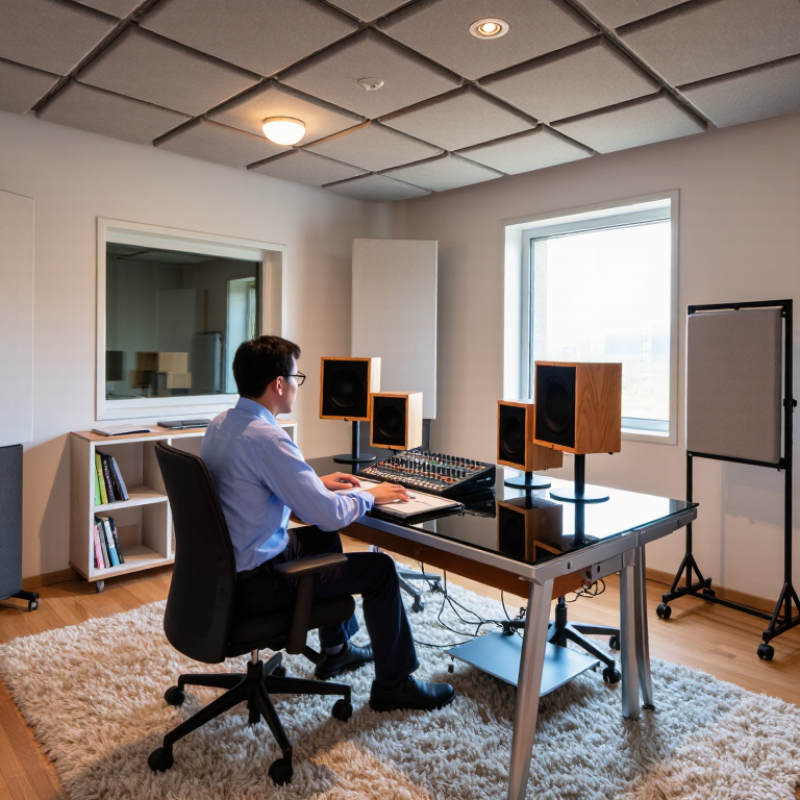
Define Your Space’s Acoustic Problems and Treatment Goals
Before choosing acoustic treatment, define what is failing in the space. Is speech unclear, music harsh, or outside noise distracting? Walk through the room during its busiest period. Note flutter echoes, bass buildup, rattling fixtures, and sound leakage through doors. Record short samples from several listening positions. Your ears reveal character; measurements reveal scale.
The target depends on the room’s purpose. A voice room may need controlled reverberation and clear consonants. A music room may need balanced decay across low and high frequencies. ISO 3382 recommends measuring reverberation time, early decay, and speech-related parameters. For speech, many designers aim for a speech transmission index above 0.60, although the right value depends on occupancy and use. The World Health Organization’s 2018 Environmental Noise Guidelines recommend indoor night noise below 30 dB(A) for good sleep. That benchmark concerns exposure, not treatment alone.
Start with a baseline. Measure background noise, reverberation time, and frequency response before installing panels. Then set a practical goal, such as reducing a 500 Hz echo or improving speech at the rear desk. Avoid covering every wall with absorptive material. That can make a room unnaturally dull while leaving low-frequency problems untouched. I have seen attractive treatment fail because the real issue was a hollow door. Recheck after each change. Small errors matter. A phone microphone can miss bass, and one listening position can mislead you. Reconsider the goal if the room becomes quiet but uncomfortable.
How to Choose Acoustic Treatment for Your Space? - Define Your Space’s Acoustic Problems and Treatment Goals
| Space Type | Common Acoustic Problem | Useful Diagnostic Signs | Primary Treatment Goal | Recommended Treatment Approach | Typical Starting Target |
|---|---|---|---|---|---|
| Home Office | Speech sounds harsh or unclear during calls; reflections from nearby walls. | Noticeable echo after clapping; remote listeners ask for repetition. | Improve speech intelligibility and reduce distracting reflections. | Place broadband absorbers at first-reflection points, add a rug or soft furnishings, and seal major gaps around doors. | Short, controlled decay; avoid a highly reflective desk-and-wall arrangement. |
| Podcast or Voice-Recording Room | Room tone, flutter echo, and coloration caused by parallel hard surfaces. | A hand clap produces a rapid ringing sound; recordings change noticeably when the speaker moves. | Capture a dry, natural voice without making the room sound acoustically dead. | Use thick broadband absorbers around the microphone area, treat side-wall reflections, and maintain some diffusion or irregularity behind the speaker. | Prioritize balanced absorption across the speech range rather than thin decorative panels alone. |
| Home Theater | Dialogue is masked by excessive reverberation; bass is uneven between seats. | Voices become unclear at higher volume; bass is boomy in some seats and weak in others. | Control reflections while preserving an immersive, natural sound field. | Combine broadband wall or ceiling absorption, low-frequency treatment in corners, and diffusion on selected rear-wall areas. | Use a balanced decay profile; do not cover every surface with absorption. |
| Music Practice Room | Instrument sound is overly bright, boomy, or difficult to judge accurately. | Certain notes become unusually loud; the room sounds very live or very dull. | Create an even response that supports performance and comfortable listening. | Use movable broadband absorbers, corner bass treatment, and reflective or diffusive surfaces in moderation. | Favor even coverage and avoid relying only on thin high-frequency absorbers. |
| Conference Room | Poor speech intelligibility, table reflections, and noise leakage. | Participants interrupt each other or increase their speaking volume; microphones pick up room reflections. | Make speech clear at every seat and reduce fatigue during meetings. | Treat ceiling and wall reflection zones, use absorptive finishes near the table, and improve door and partition sealing where privacy matters. | Aim for a controlled reverberant environment appropriate for speech communication. |
| Open-Plan Office | Speech distraction, long-distance noise propagation, and insufficient privacy. | Conversations remain audible across workstations; phone calls disrupt nearby staff. | Reduce distraction and limit the distance over which speech remains intelligible. | Use ceiling absorption, workstation screens, strategic zoning, carpet or other suitable floor finishes, and controlled sound masking where appropriate. | Treat the ceiling and layout together; wall panels alone rarely solve open-plan noise transmission. |
| Restaurant or Café | High overall noise, clattering surfaces, and reduced speech clarity. | Customers raise their voices as occupancy increases; hard ceilings and floors create a lively sound field. | Maintain energetic ambience while keeping conversation comfortable. | Add ceiling baffles or acoustic ceilings, upholstered seating, wall absorption, and vibration or impact-noise control where needed. | Prioritize large-area absorption and durable, cleanable materials. |
| Small Classroom | Teacher’s voice is reflected or masked by background noise. | Students at the rear have difficulty following speech, especially when the room is occupied. | Maximize speech intelligibility throughout the listening area. | Treat the ceiling and rear wall, reduce strong side-wall reflections, and control noise from doors, HVAC systems, and adjacent rooms. | Use measured reverberation and background-noise checks rather than judging the room by appearance alone. |
Note: These recommendations are practical starting points. Final treatment should consider room dimensions, construction, occupancy, furniture, sound sources, and measurements such as reverberation time, background noise, and frequency response.
Related Posts
-
Top 5 Essential Acoustic Treatment Solutions for Home Studios
-
Top Sound Panels for Better Room Acoustics?
-
What Are the Top 10 Types of Acoustic Solutions?
-
2026 Best Sound Reducing Panels for Home and Office Use?
-

2025 How to Choose the Best Acoustic Panels for Your Space
-

Discover the Best Acoustic Panels in China for Your Needs?