2026 Best Sound Proof Panels for Global Buyers?
In 2026, global buyers will need more than attractive wall coverings. They will need sound proof panels that solve measurable acoustic problems. Offices, hotels, studios, classrooms, and apartments each produce different noise patterns. A busy hotel corridor sounds nothing like a small podcast room.
Grand View Research reports continued growth in the global acoustic insulation market through 2030. Its analysis links demand to urban construction, stricter building expectations, and rising indoor comfort concerns. MarketsandMarkets also identifies commercial buildings, transportation, and industrial facilities as important application areas. These reports suggest strong demand, but market growth does not guarantee product quality. Specifications still matter.
Julian Treasure, a respected sound consultant, said, “We are losing our listening.” His warning is highly relevant to modern buildings. Excessive reverberation can make speech unclear, even when outside noise seems controlled. The World Health Organization connects environmental noise with sleep disturbance, annoyance, and wider health risks. Buyers should therefore compare NRC or absorption ratings, panel thickness, fire performance, installation methods, and test standards. A decorative panel may reduce echo. It may not block neighboring machinery or traffic.
No panel wins every room. That is the uncomfortable part. Product photos often look convincing, while laboratory results tell a different story. This guide compares 2026 sound proof panels for global buyers through performance, durability, sustainability, compliance, and total installed cost. Country-specific building requirements may differ, so independent verification remains essential. Brilliant marketing cannot replace acoustic testing.
What Soundproof Panels Are and How They Work
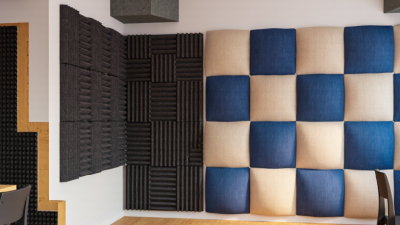
Soundproof panels are building products designed to control unwanted noise, but the label can be misleading. Many panels absorb reflections inside a room rather than stop sound passing through walls. Their cores may use mineral fiber, recycled fiber, foam, or layered composites. Tiny air spaces convert some sound energy into heat. That reduces echo. It does not create silence.
Effective noise control usually combines absorption, mass, airtightness, and separation. A thick porous panel handles speech and mid-to-high frequencies well. Bass needs greater thickness, an air gap, or a heavier barrier. Sealed edges matter. A small gap around a door can weaken an entire wall treatment. Placement also changes results; panels near strong reflection points often improve clarity faster than random coverage.
For global buyers in 2026, independent laboratory data deserves attention. Check absorption ratings, test methods, fire performance, moisture resistance, and volatile-emission information. Climate matters too. Humid warehouses can damage poorly protected materials before installation. In practical room assessments, I compare the panel’s thickness, mounting system, and real coverage area, not only its advertised rating. Some products look impressive but cover too little wall space. One limitation remains easy to overlook: acoustic improvement depends on the whole room. A panel cannot fix every source of noise, and I sometimes underestimate how much doors, windows, and ventilation paths affect the final result.
2026 Best Soundproof Panels for Global Buyers?
What Soundproof Panels Are and How They Work
The chart shows representative sound absorption coefficients for a 50 mm porous acoustic panel at common test frequencies. Higher values indicate that more incident sound energy is absorbed rather than reflected. Actual performance varies with panel thickness, density, air gap, mounting method, and room conditions.
Acoustic absorption helps reduce reverberation and echo inside a room. It is different from sound isolation, which requires construction methods such as mass-loaded barriers, sealed doors, decoupled walls, and airtight joints.
Main Types of Soundproof Panels for Different Noise Problems
The right panel depends on the noise path, not the room’s appearance. WHO’s Environmental Noise Guidelines recommend below 40 dB at night for healthy indoor sleep. That target is difficult when traffic, machinery, or voices pass through weak walls.
Absorptive panels use porous cores to reduce echoes and speech reflections. They suit offices, studios, classrooms, and restaurants. Their Noise Reduction Coefficient, or NRC, measures absorption, not isolation. Heavy barrier panels work differently. They add mass and limit airborne noise through walls and doors. Composite panels combine a dense layer with insulation, helping with conversations and equipment noise. For footsteps and vibration, ceiling clouds alone may disappoint. Resilient mounts, floating floors, and vibration-control layers are often more effective. Laboratory ratings under ISO 10140 or ASTM E90 provide useful comparisons, but field performance can be lower.
Tips: Identify the noise source first. Cover gaps around doors, sockets, and ducts. Place absorbers at first-reflection points, especially behind speakers and opposite hard walls. Use thicker panels for low frequencies, though bass control needs air gaps or tuned systems. In practice, many buyers choose attractive panels and expect silence. That expectation needs challenging. A panel is not a magic wall. Measure before and after installation with the same microphone position, time, and operating conditions. Even a 3 dB improvement can be meaningful, but it may sound less dramatic than expected.
How to Choose Panels by Room, Material, and Acoustic Needs
Choosing the 2026 best sound proof panels starts with the room, not the product label. A bedroom usually needs soft panels that reduce speech reflections and nighttime echo. A home office benefits from wall panels near the desk, microphone, and opposite wall. Music rooms need broader coverage, including ceiling treatment and low-frequency control. Measure before ordering. A simple clap test reveals flutter echo, but it cannot replace professional acoustic measurements. Sound absorption improves room clarity; true soundproofing requires mass, airtight construction, and structural separation. Confusing these goals often leads to wasted money.
Material choice should match both acoustic needs and daily conditions. Polyester fiber panels are lightweight, clean-looking, and practical for offices or classrooms. Fabric-wrapped mineral or fiberglass products can absorb more sound, but their cores need secure covering and careful installation. Wood slat panels add warmth and scatter reflections, although they may require an absorptive backing. Check fire performance, moisture resistance, edge durability, and indoor-air documentation before buying internationally. Humid coastal rooms need different protection from dry studios. Installation matters greatly. Leave small gaps only when the design requires them, and avoid covering every hard surface without testing the result. Over-treated rooms can feel unnaturally dull. I have found that balanced coverage usually sounds more natural than maximum coverage, though every room behaves differently. Recheck the space after installation, because the first plan may be wrong.
| Panel Type | Typical Material | Common Thickness | Typical Acoustic Performance | Best Room Applications | Primary Acoustic Function | Moisture and Durability Considerations | Installation Method | Key Selection Advice |
|---|---|---|---|---|---|---|---|---|
| Fabric-Wrapped Absorber | Fiberglass, mineral wool, or polyester fiber core with an acoustically transparent fabric face | 25–100 mm | Typical NRC: 0.70–1.00 | Offices, conference rooms, classrooms, studios, restaurants, home theaters | Reduces reflected speech and music energy; controls reverberation and echo | Suitable for dry indoor areas; fabric and core should be specified for the required fire rating | Z-clips, impaling clips, adhesive, or mechanical fasteners | Use thicker panels or an air gap behind the panel when stronger low-frequency absorption is required. |
| PET Acoustic Felt Panel | Recycled or virgin polyethylene terephthalate fibers, usually formed into a rigid felt board | 9–25 mm | Typical NRC: 0.25–0.80 | Open-plan offices, schools, retail interiors, corridors, workstations | Controls mid- and high-frequency reflections; supports speech privacy when used with a complete acoustic design | Lightweight and resistant to splitting; prolonged exposure to water and high humidity should be avoided unless specifically rated | Adhesive, clips, screws, suspension systems, or baffles | Choose thicker, shaped, or suspended versions for more absorption than a thin flat wall panel can provide. |
| Mineral Wool Panel | Rock mineral wool or glass mineral wool with a perforated, fabric, or rigid facing | 40–100 mm | Typical NRC: 0.85–1.10 | Recording rooms, cinemas, auditoriums, industrial spaces, offices with high reverberation | Broadband absorption, including stronger performance in the speech and upper-bass ranges when thick and air-spaced | Good dimensional stability and fire performance when the complete assembly is properly tested; protect exposed fibers with a suitable facing | Mechanical clips, rails, Z-clips, or suspended frames | Review the tested assembly rather than judging performance from core density alone. |
| Fiberglass Acoustic Panel | Rigid fiberglass board with fabric, micro-perforated, or painted acoustic facing | 25–100 mm | Typical NRC: 0.80–1.10 | Studios, meeting rooms, broadcast spaces, lecture rooms, public interiors | Efficient broadband reverberation control with a high absorption-to-weight ratio | Lightweight and stable indoors; the facing should be selected for impact, cleaning, and fire requirements | Clips, cleats, adhesive, or framed mounting systems | Specify an acoustically open fabric or facing; decorative coverings that block airflow can reduce absorption. |
| Perforated Wood Panel | Perforated MDF, plywood, or veneer-faced wood with an absorptive backing and cavity | 12–25 mm face with an acoustic cavity or backing layer | Typical NRC: 0.45–0.90 | Auditoriums, restaurants, hotels, libraries, premium offices, music rooms | Combines sound absorption with architectural finish; performance depends heavily on perforation, backing, and cavity depth | Use interior-grade boards in controlled humidity; verify formaldehyde, fire, and moisture requirements for the destination market | Clips, rails, screws, or concealed fixing systems | Do not evaluate the wood face alone; request test data for the complete panel and backing configuration. |
| Slatted Wood Acoustic Panel | Wood veneer or laminate slats mounted over a black acoustic felt or mineral-fiber backing | Approximately 20–45 mm overall | Typical NRC: 0.60–0.95 | Offices, hospitality spaces, home theaters, living rooms, reception areas | Absorbs reflected sound while providing a decorative linear surface; the backing layer supplies most of the absorption | Suitable for normal indoor conditions; edges and backing should be protected during transport and installation | Screws through battens, mounting clips, or a subframe | More open slat spacing and a deeper cavity generally improve absorption, especially at lower frequencies. |
| Acoustic Foam Panel | Open-cell polyurethane or melamine foam with a wedge, pyramid, or convoluted profile | 25–100 mm | Typical NRC: 0.30–0.90 | Voice booths, small studios, podcast rooms, equipment enclosures, controlled indoor spaces | Primarily absorbs mid- and high-frequency reflections; thin foam is weak at low frequencies | Must be checked for fire, smoke, UV, and aging performance; avoid untested products in public or escape-route areas | Adhesive, removable mounting strips, or framed inserts | Use verified fire-rated products for commercial projects and never treat thin foam as a substitute for wall sound isolation. |
| Polyester Ceiling Baffle | Rigid polyester fiber board or molded PET with fabric or printed finish | 12–50 mm | Typical NRC: 0.60–1.00 | Open offices, classrooms, sports facilities, cafeterias, warehouses, high-ceiling rooms | Reduces ceiling reflections and reverberation over a large exposed surface area | Lightweight and suitable for suspended installation; select a finish for dust, cleaning, humidity, and fire conditions | Cables, aircraft wire, grid systems, or ceiling tracks | Increase the number, size, or two-sided exposure of baffles when ceiling absorption is the main treatment strategy. |
| Acoustic Cloud | Fabric-wrapped mineral fiber, fiberglass, or PET panel suspended horizontally below the ceiling | 25–100 mm | Typical NRC: 0.80–1.10 | Meeting rooms, classrooms, restaurants, atriums, open-plan workplaces | Absorbs sound from both sides and reduces ceiling-related reflections without covering the entire ceiling | Requires secure suspension and adequate clearance from lights, sprinklers, HVAC, and other services | Aircraft cable, threaded rod, or dedicated suspension kits | An air gap above the cloud increases the effective absorption area and can improve lower-frequency performance. |
| Bass Trap | Thick porous mineral wool, fiberglass, or specialized low-frequency absorber in a corner or wall module | 100–300 mm or more | No single NRC value reliably describes deep-bass performance | Recording studios, control rooms, home theaters, rehearsal rooms | Reduces room modes and low-frequency buildup; complements broadband wall and ceiling treatment | Use a protected, fire-tested enclosure suitable for the room and local building requirements | Corner mounting, wall brackets, or freestanding frames | Prioritize placement and sufficient depth; thin decorative panels are not effective bass traps. |
| Acoustic Curtain | Heavy multilayer textile, quilted fabric, or fabric combined with porous acoustic layers | Variable; commonly 5–25 mm, excluding pleats and air space | Performance varies widely; request laboratory data for the installed configuration | Performance venues, temporary partitions, classrooms, studios, flexible meeting spaces | Provides variable absorption and can reduce reflected sound when fully deployed and properly pleated | Requires suitable flame-retardant and cleaning specifications; performance changes with pleat ratio and distance from the wall | Tracks, rails, ceiling hangers, or movable frames | Specify coverage, fullness, weight, fire classification, and acoustic test conditions—not fabric weight alone. |
| Sound-Isolation Wall Panel System | Mass-loaded layers, resilient channels, gypsum board, insulation, and sealed joints; not simply a porous absorber | System-dependent; commonly 75–200 mm overall | Use tested STC or Rw values; NRC is not an isolation rating | Home theaters, studios, plant rooms, apartments, offices requiring room-to-room isolation | Limits airborne sound transmission through a wall or enclosure when all components are correctly assembled | Requires careful detailing around doors, outlets, penetrations, floors, ceilings, and ventilation paths | Full wall assembly with sealed perimeter and decoupled or resilient construction where required | Choose this category when the goal is sound isolation; ordinary decorative acoustic panels mainly improve room sound quality. |

Installation Methods for Homes, Offices, Studios, and Public Spaces
The best soundproof panels in 2026 should match the room, not only its appearance.
In homes, measure wall reflections before buying materials. Mount absorptive panels at ear height, especially near desks, sofas, and television areas. Leave a small air gap behind each panel when possible. This can improve low-frequency absorption.
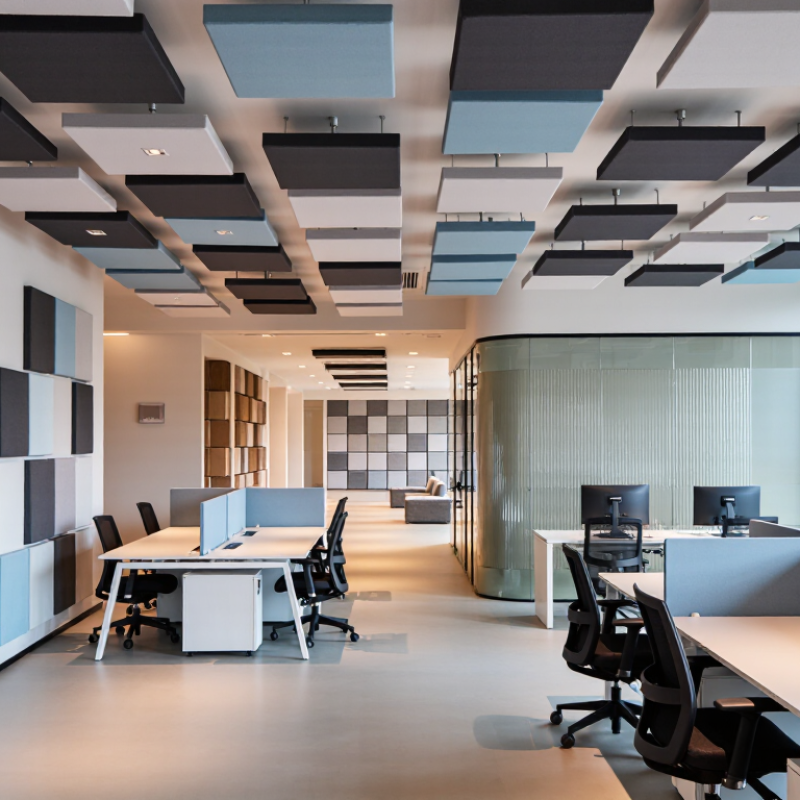
In offices, place panels between workstations and beside meeting tables. Ceiling clouds can reduce voices bouncing across open floors. Use secure anchors and avoid blocking sprinklers, lights, or ventilation. In my experience, uneven placement often works better than covering one wall completely. However, decorative panels alone cannot stop loud sounds passing through doors or thin partitions.
Studios need closer testing. Place panels at first-reflection points, then add thicker bass treatment in corners. Check the room with familiar recordings and spoken voice tests.
Public spaces require stronger fixing methods, cleanable surfaces, and clear access routes. Panels near entrances should resist accidental impact. Fabric may also need regular inspection.
A common mistake is treating echo control as full sound isolation. Sealing door gaps, improving wall mass, and controlling windows may matter more. Every room behaves differently, so review measurements after installation. I would leave some panels adjustable at first. That small compromise makes later corrections easier.
Global Buying Factors: Standards, Shipping, Cost, and Maintenance
2026 Best Sound Proof Panels for Global Buyers?
Global buyers should define the noise problem before comparing panels. Acoustic absorption reduces echo, while true sound isolation requires mass, airtight construction, and tested assemblies. They are not interchangeable.
Ask suppliers for current laboratory reports, not only marketing claims. Useful references may include ISO 354 or ASTM C423 for absorption, and ISO 10140 or ASTM E90 for sound transmission testing.
Fire performance must match the destination market and building use. Check the exact product, thickness, mounting method, and test laboratory. Small differences can change results.
Shipping can reshape the final price. A low unit price can mislead. Request a complete landed-cost estimate, including packing, freight, insurance, customs handling, and local delivery.
Confirm panel dimensions and pallet volume before ordering. Moisture-resistant packaging matters during long sea transport.
Inspect cartons immediately, then photograph damaged edges or crushed corners. Replacement terms should be written clearly. Verbal promises are weak evidence.
Maintenance also affects global value. Select washable fabrics or sealed surfaces for busy offices, studios, and classrooms.
Use a soft vacuum attachment, mild cleaner, and limited moisture. Harsh chemicals may stain coverings or weaken adhesives.
Replacement fabric and spare panels should be available locally when possible. One planning mistake is ignoring future repairs. Another is trusting one test number too much.
Room shape, doors, ventilation, and installation quality can defeat an excellent panel. A careful buyer should compare samples, verified documents, total cost, and realistic maintenance demands.
Related Posts
-
Top Sound Panels for Better Room Acoustics?
-
China Top Sound Treatment Panels Manufacturers?
-
How to Choose Sound Insulation Panels for Any Space?
-
What Are the Best Types of Soundproof Panels?
-
Discover the Best Acoustic Panels in China for Your Needs?
-
Top Acoustic Treatment Panels for Soundproofing Your Space?