China Top Sound Treatment Panels Manufacturers?
China has become a major source of sound treatment panels for studios, offices, cinemas, classrooms, and hospitality spaces. However, finding the right manufacturer requires more than comparing prices. Buyers should examine acoustic test data, material consistency, fire performance, production capacity, and installation support.
As acoustics authority Dr. Floyd Toole said, “The room is part of the loudspeaker.” His observation explains why sound treatment panels must match the room, not merely look attractive. A panel that performs well in a vocal booth may be unsuitable for a large meeting room. Thickness, density, surface texture, air gaps, and placement all influence the final result.
This guide reviews leading Chinese manufacturers through practical and verifiable criteria. These include laboratory reports, absorption ratings, customization experience, export records, and quality-control procedures. Product photographs can help, but they do not prove acoustic performance. Ask for test standards and project references. Better still, request samples before placing a large order.
No ranking is perfect. Manufacturer information can change, and some published claims need closer checking. That is worth admitting. A reliable supplier should explain limitations, not promise silence from a thin decorative panel. We will compare established companies, specialist acoustic brands, and factory-backed suppliers. The goal is a clearer purchasing decision, supported by evidence, technical judgment, and real-world application details.
What Are Sound Treatment Panels and How Do They Work?
Sound treatment panels manage sound reflections inside a room. They do not completely block noise from entering or leaving. Most panels use porous materials, such as mineral fiber, fiberglass, or acoustic foam. When sound waves reach the surface, air movement passes through the material. Friction then converts part of the sound energy into a small amount of heat. Think of it as controlled absorption.
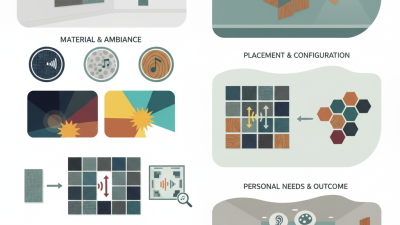
Placement matters more than appearance. Panels often work best at early reflection points on side walls and ceilings. These are the areas where sound quickly bounces toward listeners or microphones. Corner bass traps can reduce low-frequency buildup, although thin panels rarely solve deep bass problems. Leaving a small air gap behind a panel can improve absorption at lower frequencies. A room can still sound uneven.
When comparing manufacturers in China, request complete product specifications and independent absorption test data. Check the panel thickness, material density, frequency range, mounting method, and surface durability. Fire and moisture performance also deserve attention, especially in commercial rooms. A decorative panel may look impressive but absorb very little sound. That mistake is easy to make. It is also wise to test a sample in the actual room, because laboratory results cannot predict every wall, floor, or furniture arrangement. Availability, packaging quality, and installation guidance reveal practical manufacturing experience.
China Top Sound Treatment Panels Manufacturers? — What Are Sound Treatment Panels and How Do They Work?
Sound treatment panels reduce reflections and reverberation inside a room. Porous panels, such as mineral-wool or fiberglass absorbers, convert part of the sound energy into a small amount of heat as air moves through their fibers.
The chart shows representative octave-band sound absorption coefficients commonly reported for a 50 mm porous acoustic panel. A higher coefficient indicates stronger absorption at that frequency. Actual laboratory results vary with panel density, fabric facing, mounting method, and the air gap behind the panel.
Key Types of Sound Treatment Panels Made in China
China Top Sound Treatment Panels Manufacturers?
China’s sound treatment industry produces several practical panel types for studios, offices, cinemas, and classrooms. Fabric-wrapped fiberglass or mineral wool panels provide strong mid- and high-frequency absorption. They commonly use 25–50 mm cores and achieve high NRC ratings when tested under ASTM C423 or ISO 354 conditions. PET felt panels are lighter, recyclable, and easy to CNC-cut into geometric designs. They suit open offices where speech reflections become distracting.
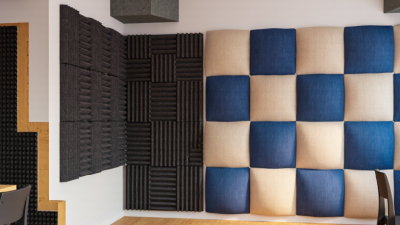
Wood slat and perforated timber panels combine absorption with a warmer visual finish. Their acoustic fleece backing controls reflections behind the decorative surface. Foam panels remain popular for small recording rooms because they are lightweight and inexpensive. However, foam mainly treats upper frequencies. It cannot replace bass traps or structural sound isolation. That distinction is often overlooked.
Fortune Business Insights reported that the global acoustic panels market reached about USD 10.6 billion in 2023, with continued growth projected through 2032. Market figures differ between research firms, partly because product categories are defined differently. Chinese manufacturers therefore need to provide complete test data, not only attractive NRC claims. In practical inspections, edge sealing, mounting gaps, and room geometry can change performance noticeably. The panel may be excellent. The installation may still fail. Buyers should request thickness, density, fire classification, absorption curves, and production consistency before comparing quotations.
How to Evaluate China’s Leading Panel Manufacturers
China Top Sound Treatment Panels Manufacturers?
Choosing a leading Chinese panel manufacturer requires more than comparing prices. Start by checking acoustic test reports from independent laboratories. Look for measured absorption data, such as NRC values or results under ISO 354 conditions. The report should identify the exact panel structure, thickness, density, and mounting method. A generic certificate proves little. Ask for recent production samples, not only polished catalog photographs.
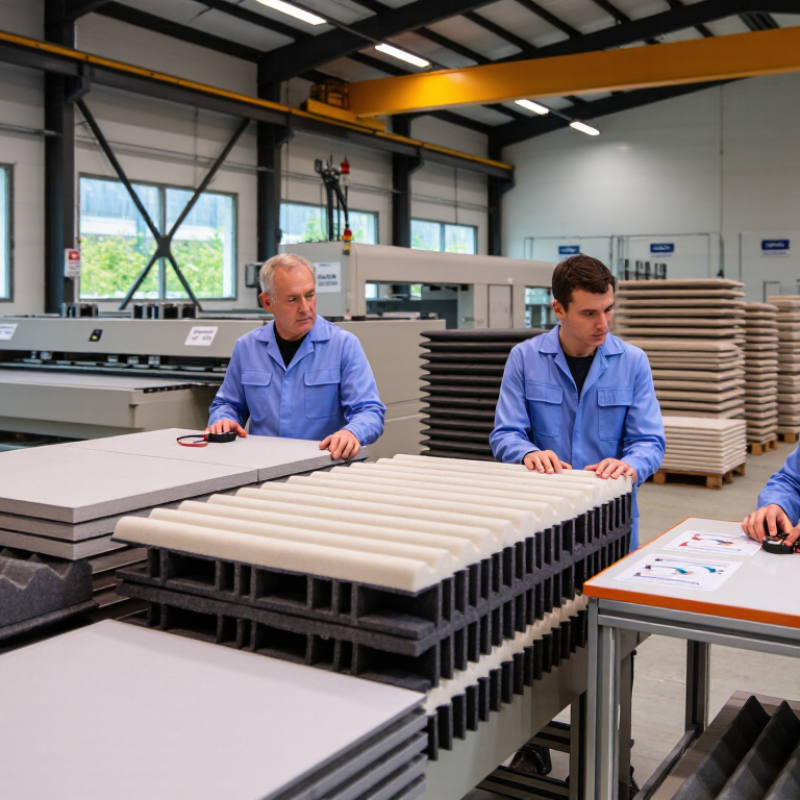
Factory experience also matters. Request a video or visit showing fiber preparation, pressing, cutting, wrapping, and quality inspection. Check whether workers record panel dimensions, edge quality, and surface defects during production. Reliable suppliers should explain how they control moisture, odor, and batch variation. Fire-performance documents must match the actual facing material and core. Confirm testing requirements for your project’s destination market.
Ask practical questions. Can the supplier repeat the same color and thickness? How are damaged panels replaced? What happens if the shipment contains warped edges? I once treated a test sample as representative, then found a production batch with noticeably softer edges. That mistake changed my inspection process. Now I compare several samples, review packing methods, and request pre-shipment photographs. A manufacturer’s response to difficult questions often reveals more than its sales presentation. Clear records, realistic claims, and consistent communication are stronger signs of expertise than the lowest quotation.
Materials, Production Standards, and Customization Options
China’s leading sound treatment panel manufacturers are differentiated by materials, testing discipline, and customization control. PET panels, mineral wool, fiberglass, and perforated wood each solve different acoustic problems. PET is lightweight and often contains recycled content, while mineral wool usually delivers stronger absorption across speech frequencies. A 2024 Grand View Research report estimates the global acoustic panels market will expand steadily through 2030, driven by offices, education, and hospitality projects. Demand is growing, but specifications still matter more than attractive surface patterns.
Professional production should include acoustic testing under ISO 354 or ASTM C423. These methods measure sound absorption in controlled reverberation rooms. ISO 11654 can then classify absorption performance using practical rating values. Fire behavior also requires attention. EN 13501-1 is commonly requested for European projects, while regional building codes may require different evidence. Reliable factories should provide batch records, test reports, density data, and formaldehyde or VOC declarations. A certificate without traceable production details is weak evidence.
Customization may cover thickness, edge shape, fabric color, perforation, printing, mounting frames, and ceiling suspension systems. For example, a 40-millimeter PET panel may suit a meeting room, while thicker fiberglass panels can address lower-frequency reverberation. CNC cutting helps create curved clouds and branded geometry.
However, customization can reduce consistency. Color matching may drift between batches, and decorative backing can lower absorption. Factory samples should be tested before mass production. Small details matter. Even experienced buyers sometimes overlook installation gaps, which can change real-world performance significantly.
Applications, Pricing Factors, and Supplier Selection Criteria
China’s sound treatment panel manufacturers serve offices, recording rooms, classrooms, restaurants, and industrial spaces. These panels mainly absorb reflected sound; they do not fully block outside noise. Fortune Business Insights valued the global acoustic panels market at about USD 11.63 billion in 2024, with continued growth expected through 2032. Demand is rising, but product quality still varies widely.
Pricing depends on panel thickness, core density, fabric or wood finish, fire rating, customization, minimum order quantity, and shipping distance. A 40–50 mm PET panel may cost more than a basic foam product because it offers better durability, appearance, and environmental performance. Installation also matters. A cheap panel can become expensive after weak packaging, difficult mounting, or high replacement rates. That lesson is easy to miss.
Supplier selection should begin with measurable evidence. Request absorption data tested under ISO 354 or ASTM C423, not only attractive product photographs. Check NRC values, test frequency ranges, fire classifications, VOC documentation, moisture resistance, and dimensional tolerances. For large projects, review production samples from different batches. Ask about factory capacity, quality inspection, packaging strength, lead times, and after-sales handling. I would not trust one sample alone. A reliable manufacturer explains test limits and installation conditions clearly, even when the results are less impressive. Market reports show growth, but real performance still depends on room volume, wall coverage, and correct placement.