
What Is the Best Type of Sound Panels?
What Is the Best Type of Sound Panels? The answer depends on your room, sound problem, and practical priorities. A recording studio needs controlled absorption. A busy office may need speech privacy. A home theater often requires balanced absorption and diffusion. There is no universal winner.
In my experience, fabric-wrapped fiberglass panels provide strong mid- and high-frequency absorption. They can reduce echoes around desks, microphones, and hard walls. PET felt panels offer a lighter, flexible option. They suit offices, classrooms, and creative spaces with modern interiors. Wood slat sound panels can improve room comfort while adding visual warmth. However, their performance depends heavily on the acoustic backing behind the slats. The surface alone does not solve every problem.
The room decides. Not the label.
Effective placement matters as much as material choice. A panel beside a reflective sidewall may improve speech clarity immediately. A ceiling cloud can soften sound above a conference table. Bass traps may be necessary when low frequencies collect in corners. Product ratings, such as NRC values, are useful, but they should not replace professional judgment. Installation quality, panel thickness, air gaps, and fire-performance documentation all deserve attention. Small details matter.
I have also seen attractive panels underperform because buyers selected them by color alone. That mistake is easy to make. A reliable decision begins with listening, measuring, and identifying the dominant reflection points. Even then, results may vary between rooms. The best sound panels are not always the most expensive. They are the ones that match the space, purpose, and acoustic challenge.
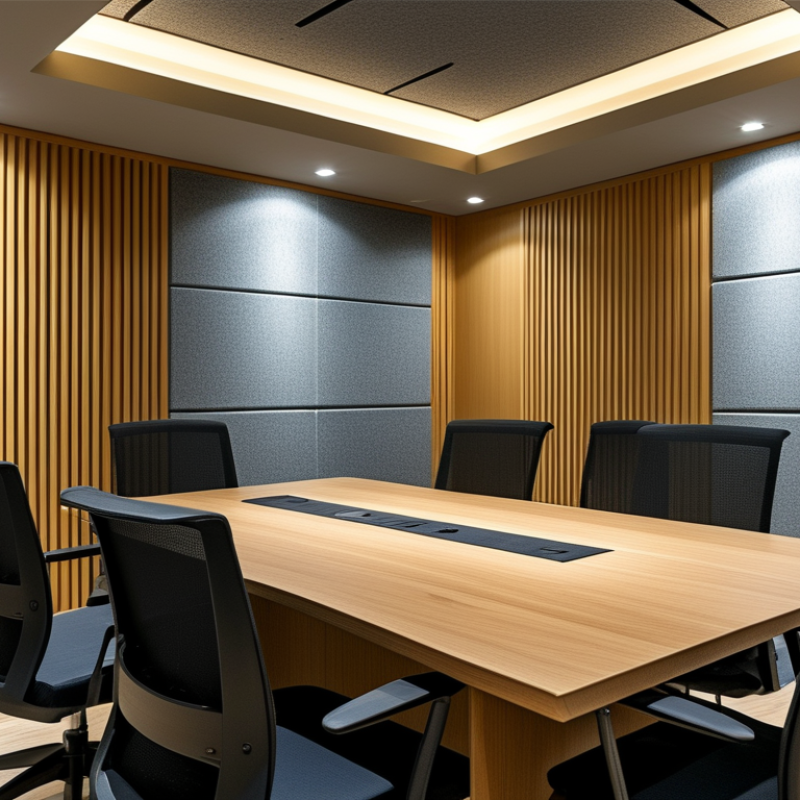
What Sound Panels Are and How They Control Room Acoustics
Sound panels are porous or fibrous surfaces that absorb airborne energy. They reduce reflections instead of blocking outside noise. A panel placed beside a speaker can soften the sharp “slap” heard from a nearby wall.
The best type depends on the room’s problem. Fabric-wrapped mineral wool panels often provide strong mid- and high-frequency absorption. ISO 11654 classifies Class A absorbers with a weighted absorption coefficient between 0.90 and 1.00. This rating is useful, but it does not describe every frequency equally. Bass may still remain uncontrolled. That is where thicker panels, air gaps, or dedicated bass traps become important. Small details matter.
Room acoustics can be measured through reverberation time, or RT60. ISO 3382 identifies RT60 as the time required for sound to decay by 60 decibels. In classrooms, ANSI/ASA S12.60 recommends a reverberation time of no more than 0.6 seconds for many smaller rooms. Excessive reflection makes speech tiring. It can also reduce clarity. In my experience, covering every wall with absorption can make a room feel unnaturally dry. I once treated a meeting room too aggressively and weakened its sense of space. A better approach combines ceiling panels, selective wall panels, and some reflective or diffusive surfaces. Measurement should guide placement, not appearance alone.
What Is the Best Type of Sound Panels? - What Sound Panels Are and How They Control Room Acoustics
| Panel Type | How It Controls Acoustics | Most Effective Frequency Range | Typical Thickness | Typical Absorption Performance | Best Uses | Main Limitations |
|---|---|---|---|---|---|---|
| Porous Absorber | Converts sound energy into small amounts of heat as air particles move through fibrous or open-cell material. | Mid and high frequencies; thicker panels improve low-mid absorption. | 25–100 mm | NRC commonly about 0.50–1.00, depending on thickness, density, mounting, and test method. | Offices, classrooms, meeting rooms, studios, restaurants, and home theaters. | Thin panels have limited effect on deep bass and do not provide significant sound isolation between rooms. |
| Fabric-Wrapped Acoustic Panel | Uses a porous core behind an acoustically transparent fabric face to absorb reflected sound. | Broadband absorption, especially speech frequencies and upper midrange. | 25–100 mm | Often approximately NRC 0.70–1.00 when properly sized and installed. | Speech intelligibility, echo reduction, conference rooms, schools, and recording spaces. | Performance depends on the fabric, core, air gap, and installation quality; fabric can be vulnerable to stains or impact. |
| PET Fiber Panel | Absorbs sound through a dense, porous fiber structure; the panel can also provide some diffusion when shaped or grooved. | Mid to high frequencies; thicker or spaced installations extend performance lower. | 9–24 mm | Commonly about NRC 0.30–0.85, with results varying substantially by thickness and air gap. | Open-plan offices, partitions, ceilings, wall graphics, and lightweight installations. | Very thin versions generally absorb less low-frequency sound than thicker fibrous panels. |
| Melamine Foam Panel | An open-cell foam dissipates sound energy through friction and airflow resistance. | Mid and high frequencies; thicker products provide broader absorption. | 25–50 mm | Often approximately NRC 0.60–0.95, depending on product construction and mounting. | Mechanical rooms, transportation interiors, studios, and spaces requiring low weight. | Can be more susceptible to physical damage and requires careful evaluation of fire, smoke, and chemical-resistance ratings. |
| Perforated Wood Panel | Perforations allow sound into an absorptive backing or cavity while the wood surface adds visual warmth and some scattering. | Mid frequencies; cavity depth and perforation design influence lower-frequency performance. | 12–25 mm face with a backing cavity | Typically about NRC 0.45–0.85, depending on perforation ratio, backing, and air space. | Auditoriums, libraries, cultural venues, restaurants, and architectural interiors. | Usually costs more and requires accurate detailing; solid or lightly perforated surfaces mainly reflect sound. |
| Slatted Wood Panel | Alternating slats and gaps expose an absorptive backing while the slat pattern partially scatters reflections. | Broadband mid and high frequencies; cavity depth affects lower frequencies. | 20–45 mm with backing | Commonly around NRC 0.50–0.85, depending on open area and backing material. | Home theaters, music rooms, offices, hospitality spaces, and feature walls. | Less effective without an absorptive backing; installation depth and detailing affect the final result. |
| Diffuser Panel | Redirects and spreads reflections rather than primarily removing sound energy, helping reduce strong flutter or focused echoes. | Frequency range is determined by panel depth and geometric sequence; deeper designs work lower. | 75–300+ mm | Not normally rated by NRC because diffusion and absorption are different acoustic functions. | Recording rooms, listening rooms, performance spaces, and controlled acoustic environments. | Does not substantially reduce reverberation by itself and requires sufficient room depth and appropriate placement. |
| Bass Trap | Uses thick porous material or a tuned resonant system to absorb low-frequency energy that gathers near room boundaries. | Low frequencies, commonly below approximately 250 Hz; exact coverage depends on design. | 150–600+ mm | Performance is design-specific and should be evaluated by frequency response rather than NRC alone. | Recording studios, home theaters, rehearsal rooms, and rooms with uneven bass response. | Requires considerable volume or careful tuning; it does not replace broadband wall or ceiling absorption. |
Selection guide: For general echo and reverberation control, choose a broadband porous panel. Use thicker panels or air gaps for improved low-frequency absorption, diffusers when reflection scattering is needed, and bass traps when low-frequency problems dominate. Actual performance should be confirmed using the manufacturer’s independent test data and the intended mounting condition.
Related Posts
-
What Are Sound Insulation Panels and How Do They Work?
-
2026 Best Acoustic Panels for Soundproofing Your Space?
-
Top Sound Panels for Better Room Acoustics?
-
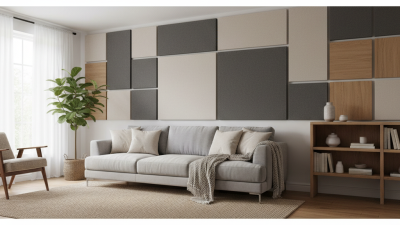
Why Sound Proof Panels Are Essential for a Quiet Home Environment
-
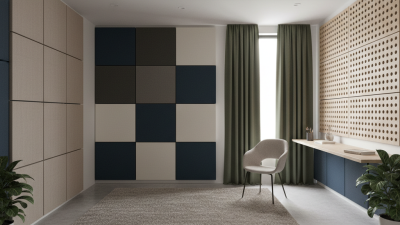
Top 10 Sound Proof Panels for Walls That Maximize Noise Reduction
-
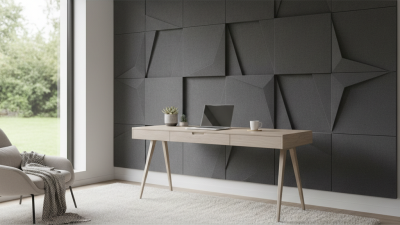
Best Noise Cancelling Panels for Soundproofing Your Home or Office