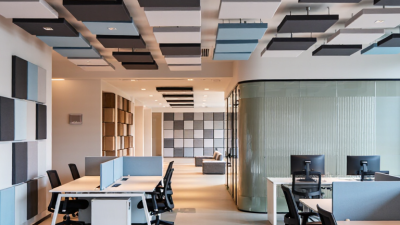
Why Choose Sound Proof Panels for Walls?
Unwanted noise can weaken concentration, disturb sleep, and reduce privacy. A thin wall may allow voices, television sounds, or traffic vibrations to pass through. Sound proof panels for walls offer a practical way to manage these problems without rebuilding an entire room.
F. Alton Everest, author of The Master Handbook of Acoustics, wrote, “Soundproofing is the art of preventing sound from entering or leaving a space.” This principle remains useful today. Effective panels help absorb reflected sound and reduce echoes. However, they cannot block every noise source alone. Wall gaps, doors, ceilings, and shared structures also matter.
Good installation begins with observation. Listen near outlets, corners, and wall joints. Notice whether the noise sounds sharp, low, airborne, or impact-related. These details guide the panel choice. Dense materials may help with transmission, while porous surfaces often improve echo control. Placement matters, too. Panels beside a desk, microphone, or television can produce noticeable changes.
The result should feel calmer, not strangely silent. That distinction matters. Some product claims sound impressive but lack measured testing. Look for acoustic ratings, laboratory information, fire-safety details, and clear installation guidance. An experienced acoustic consultant can also identify weaknesses that a simple visual inspection misses.
There is no perfect shortcut. Sound proof panels for walls work best as part of a wider acoustic plan. Used carefully, they can create a quieter office, bedroom, studio, or meeting room. Used carelessly, they may only decorate the wall. That limitation deserves honest attention.
What Are Soundproof Wall Panels?
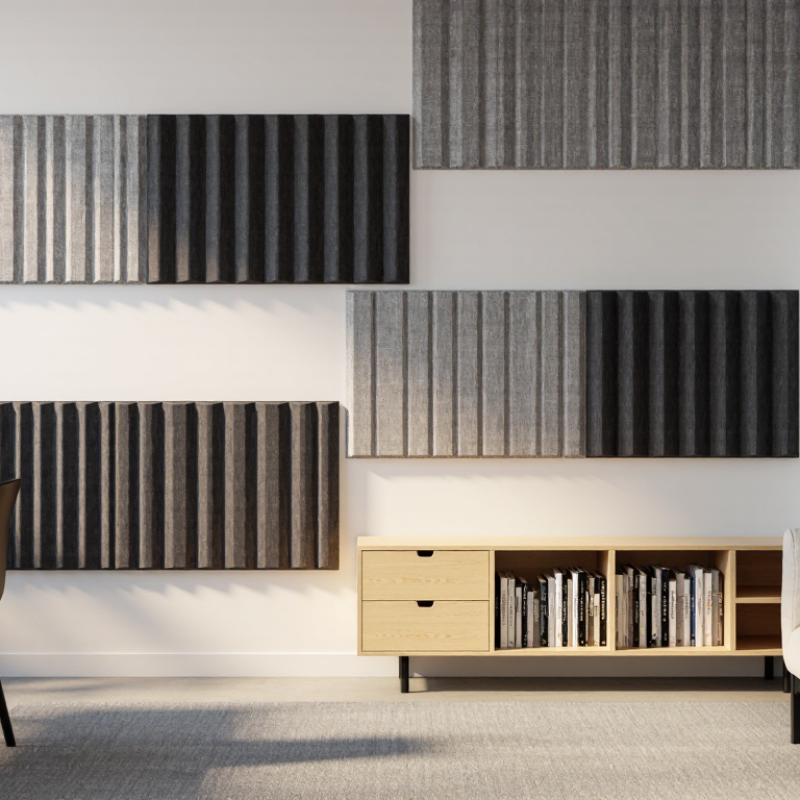
Soundproof wall panels are engineered building components that help reduce sound passing through walls. Unlike decorative acoustic panels, they do more than soften echoes inside a room. Effective systems usually combine dense materials, airtight layers, resilient channels, and insulation. Each part addresses a different path for noise.
In practical room assessments, gaps often cause bigger problems than expected. Sound can travel through outlets, door frames, ceiling joints, and thin wall sections. A well-designed panel system creates a continuous barrier across the wall surface. Some panels add mass, while others absorb vibration within the wall cavity. Results depend on installation quality, wall structure, and the type of noise involved. Voices, traffic, and low-frequency music may require different solutions. No panel blocks everything. That expectation needs checking.
Tips: Inspect the existing wall before choosing a product. Seal visible cracks and cable openings first. Ask for tested sound reduction data, not vague performance claims. Consider thickness, fire rating, moisture exposure, and fixing methods. A small untreated gap can weaken an otherwise strong assembly. Measure the room before and after installation when possible. The improvement may feel subtle at first, especially with bass sounds. That does not always mean the system failed.
How Do Soundproof Panels Reduce Noise?
Why Choose Sound Proof Panels for Walls?
Soundproof panels are useful because they manage noise at its source and inside the room. They do not create a silent box. That expectation needs correcting. Wall panels mainly absorb reflected sound, reduce echo, and improve speech clarity. They are especially practical in offices, studios, classrooms, and home workspaces.
How Do Soundproof Panels Reduce Noise?
Porous materials trap sound energy in small air pockets. Friction then changes part of that energy into low-level heat. This softens voices, keyboard clicks, and sharp reflections from hard walls. Testing under ASTM C423 can produce an NRC rating. An NRC of 0.80 suggests strong absorption under the test method, but it does not mean 80% less noise everywhere. Sound transmission through walls requires mass, airtight construction, and proper isolation. The World Health Organization’s Environmental Noise Guidelines for the European Region, published in 2018, recommends keeping night noise below 40 dB outdoors near bedrooms. Panels alone cannot guarantee that result.
Tips: Cover the first reflection points beside speakers and opposite hard surfaces. Leave small air gaps when the installation system allows them. Measure before and after with the same device and room position. Remember corners. Low-frequency noise often needs thicker treatment or structural upgrades. A common mistake is covering every wall with thin foam. It may reduce echo, yet nearby traffic can remain clearly audible.
What Materials and Designs Are Available?
Why Choose Sound Proof Panels for Walls?
Wall panels work best when their material matches the acoustic problem. Fabric-wrapped fiberglass and mineral wool absorb speech, reducing echoes in offices, studios, and meeting rooms. Their performance is commonly tested under ASTM C423, which reports the Noise Reduction Coefficient, or NRC. An NRC near 0.80 indicates strong broadband absorption, although room shape and installation still matter. PET felt offers a lighter, recycled-content option. It can be cut into waves, fins, hexagons, or suspended clouds. The visual detail is useful, but not always acoustically perfect.
Wood slat panels combine a solid surface with an absorptive backing. They control reflections while preserving a warmer interior appearance. Perforated wood and microperforated metal use small openings to trap sound inside a cavity. These designs suit classrooms, restaurants, and public interiors where durability matters. ISO 11654 classifies sound absorbers from Class A to Class E, helping specifiers compare tested performance. However, absorption is not the same as sound blocking. A thin decorative panel will not stop loud voices traveling through a wall. The 2018 World Health Organization Environmental Noise Guidelines recommend bedroom night-time exposure below 40 dB Lnight, showing why room treatment and wall construction should be considered together. In practice, installers sometimes overestimate panel coverage. A careful design should review reverberation time, gaps, ceiling surfaces, and furniture before selecting the final material.
Where Can Soundproof Wall Panels Be Used?
Soundproof wall panels are useful in many spaces where noise affects concentration, privacy, or comfort. Their best use depends on the room’s structure, sound sources, and surface materials. These panels can absorb reflected sound, reduce echo, and make conversations easier to understand. They cannot completely block loud sounds passing through thin walls.
In home offices, panels help soften keyboard noise, video calls, and street reflections. A small room with bare walls may sound sharp and tiring. Bedrooms can also benefit from quieter acoustic conditions, especially near busy roads. However, panel placement matters. Covering one wall may improve clarity, while covering every surface could make the room feel unnaturally dull.
Commercial spaces often use soundproof wall panels in meeting rooms, open offices, restaurants, classrooms, and reception areas. In restaurants, they can reduce the harsh mix of dishes, voices, and background music. In classrooms, they support clearer speech from teachers and students. Recording rooms need more careful planning, because absorption, bass control, and isolation solve different problems. They are not interchangeable.
Panels also suit shared walls in apartments, therapy rooms, and small creative studios. The finish should resist daily wear and remain easy to clean. Test the room before installation. Sometimes a door gap or ceiling surface causes more noise than expected. That detail is easy to miss. A professional acoustic assessment can prevent expensive, disappointing changes.
Why Choose Soundproof Panels for Walls?
Soundproof wall panels are commonly used to absorb reflected sound, reduce reverberation, and improve speech clarity in spaces where noise control is important.
The chart shows approximate target reverberation times commonly used in acoustic design. Lower values generally indicate a stronger need for sound-absorbing wall treatment. Actual targets vary according to room size, occupancy, finishes, and applicable building standards.
How Should You Choose and Install Them?
Choosing wall panels starts with identifying the noise problem. Soft panels absorb echoes inside a room, but they do not completely block voices from next door. Measure the room, note the loudest wall, and listen for reflections near bare corners. Thicker panels usually absorb lower frequencies more effectively. Check the acoustic rating, fire performance, moisture resistance, and mounting method before purchasing. A bedroom needs different treatment from a recording room or busy office. Do not choose by color alone.
Installation needs careful spacing and patience. Clean the wall, mark the layout, and keep panels evenly aligned. Leave small air gaps behind them when the mounting system allows it. This space can improve absorption, especially on hard plaster walls. Use suitable anchors for masonry, drywall, or timber studs. Never rely on adhesive alone when panels are heavy. My first installation looked tidy, but I placed every panel too close together. The room sounded better, yet voices still bounced from the uncovered ceiling. That mistake taught me to treat the whole sound path, not only the most visible wall. Test the room after installation by clapping, speaking, and recording from several positions. Move one panel if a sharp reflection remains. Results can be uneven. That is normal. Keep the manufacturer’s installation guidance nearby, and check local safety requirements before fixing panels permanently.
Why Choose Soundproof Panels for Walls? — How Should You Choose and Install Them?
| Panel Type | Primary Function | Typical Acoustic Performance | Best Applications | Advantages | Limitations | Installation Method |
|---|---|---|---|---|---|---|
| Fabric-Wrapped Acoustic Panel | Absorbs reflected sound and reduces reverberation inside a room. | Typically designed for mid- and high-frequency absorption; many products achieve an NRC of approximately 0.70–1.00 when tested under recognized laboratory methods. | Offices, classrooms, conference rooms, studios, restaurants, and home theaters. | Lightweight, decorative, available in many colors, and effective for improving speech clarity. | Does not normally provide major airborne sound isolation between rooms by itself. | Mount with construction adhesive, impaling clips, Z-clips, or mechanical fasteners. Leave an air gap behind the panel when additional low-frequency absorption is needed. |
| Polyester Fiber Panel | Provides sound absorption while adding a lightweight, impact-resistant wall finish. | Performance depends on thickness and density; thicker panels generally absorb more low-frequency energy than thin decorative panels. | Open-plan offices, schools, corridors, meeting spaces, and activity rooms. | Easy to cut, low in weight, often available with recycled content, and suitable for patterned wall designs. | Thin versions may have limited low-frequency absorption and cannot replace a full sound-isolation wall assembly. | Use construction adhesive, hook-and-loop systems, clips, or concealed mechanical fixings. Confirm the substrate is clean, dry, and structurally sound. |
| Mineral Wool Acoustic Panel | Absorbs a broad range of frequencies and can support strong reverberation control. | Commonly available in thicknesses of about 25–100 mm; thicker and denser assemblies generally deliver stronger low-frequency absorption. | Recording rooms, cinemas, music rooms, broadcast spaces, and rooms requiring high acoustic control. | High absorption potential, good fire-performance options, and effective across a wide frequency range. | May require a protective facing or frame; exposed edges can be vulnerable to damage and installation should follow safety guidance. | Install inside a timber or metal frame, with a breathable fabric facing. Use gloves and follow the material safety instructions during cutting and handling. |
| Wood Slat Acoustic Panel | Combines sound absorption with a finished architectural surface. | Acoustic performance depends on the slat spacing, backing absorber, panel thickness, and any air cavity behind the system. | Reception areas, restaurants, offices, libraries, media rooms, and residential interiors. | Offers a natural visual appearance and can provide both diffusion and absorption when correctly constructed. | Usually costs more than basic fabric or fiber panels; decorative slats alone have limited absorption without an acoustic backing layer. | Fix through the panel into wall studs or suitable anchors. Use battens or spacers where an air cavity is part of the acoustic design. |
| Perforated Wood or Metal Panel | Uses perforations and an absorptive backing or cavity to control reflected sound. | Absorption is strongly affected by perforation ratio, cavity depth, backing material, and panel construction. | Auditoriums, public buildings, meeting rooms, transport facilities, and durable commercial interiors. | Durable, cleanable, and suitable for projects requiring a robust finished wall system. | Requires accurate detailing and usually a more complex support system than lightweight decorative panels. | Install on a manufacturer-specified grid or frame, maintain the designed cavity depth, and avoid blocking the perforated surface. |
| Mass-Loaded Barrier or Composite Isolation Panel | Reduces airborne sound transmission by adding mass and, in some systems, decoupling layers. | Sound isolation depends on the complete wall assembly, including mass, airtightness, studs, cavities, flanking paths, and doors. | Shared walls, equipment rooms, home theaters, music practice rooms, and areas exposed to external noise. | More relevant to sound isolation than standard decorative absorption panels. | Usually heavier and more difficult to install; it cannot correct weak doors, windows, ceilings, floors, or ventilation paths by itself. | Install continuously according to the tested wall-system design. Seal seams, edges, outlets, and penetrations with compatible acoustic sealant. |
| Foam Acoustic Panel | Absorbs some reflected sound, especially in the mid- and high-frequency range. | Performance varies widely with thickness, profile, density, and mounting method; thin foam generally has limited low-frequency absorption. | Voice recording areas, small studios, podcast rooms, and temporary acoustic treatment. | Lightweight, easy to install, and often economical for basic reverberation control. | Not a reliable substitute for wall mass or decoupling; fire performance, durability, and appearance must be checked carefully. | Use manufacturer-approved adhesive or removable mounting hardware. Do not cover required sprinklers, vents, exits, or electrical equipment. |
| Perforated Acoustic Wall Panel | Controls reverberation through a perforated face combined with an absorptive core or cavity. | Can provide targeted absorption when the perforation pattern and cavity are designed for the intended frequency range. | Lecture halls, classrooms, conference centers, theaters, and high-traffic public interiors. | Can be integrated into a complete wall finish and designed for consistent room coverage. | Requires careful layout, alignment, and maintenance access; performance may decrease if perforations are obstructed. | Follow the specified rail, clip, or frame system. Keep joints, edges, and cavity depths consistent with the tested design. |
Selection and installation guidance: First identify whether the goal is sound absorption inside the room or sound isolation between spaces. Review independently tested acoustic data, measure the wall area and panel coverage, treat doors and penetrations, and maintain airtight joints. NRC values describe sound absorption, while STC or similar ratings describe the sound-isolation performance of a complete wall assembly; these ratings should not be treated as interchangeable.
Related Posts
-
2026 Best Sound Proof Panels for Global Buyers?
-
Best Acoustic Panels for Walls That Improve Sound Quality?
-
Top Sound Panels for Better Room Acoustics?
-
China Best Sound Panels for Walls How to Choose?
-
10 Best Sound Absorbing Panels for Any Space?
-
What is the Best Sound Proof Panels for Walls to Reduce Noise Efficiently