What Are Sound Insulation Panels and How Do They Work?
Sound insulation panels help control unwanted noise between rooms, floors, and buildings. They are designed to reduce sound transmission, rather than simply make a space quieter. In a home office, for example, they may limit voices passing through a shared wall. In a recording room, they can support clearer audio by reducing sound leakage.
These panels usually work through mass, absorption, decoupling, or a combination of these principles. Dense materials resist airborne sound, while fibrous or porous cores absorb some acoustic energy. Some systems create an air gap between layers, making vibration harder to travel. Installation details matter greatly. Gaps around outlets, doors, ceilings, and pipe openings can weaken an otherwise effective assembly.
The materials may include mineral wool, acoustic foam, laminated boards, fabric-wrapped cores, or composite products. Each option has different performance, fire ratings, moisture limits, and installation requirements. A qualified acoustic professional can assess the noise source, wall structure, and target sound reduction before recommending a solution.
Not every panel works everywhere.
That point is often overlooked. Decorative acoustic panels may reduce echo inside a room, but they may not prevent neighboring noise from entering. Product claims also require careful reading, because laboratory ratings may not reflect real-world installation. This guide explains what sound insulation panels are, how they function, and where their performance may fall short. It also considers practical selection, placement, maintenance, and the limitations that homeowners, designers, and contractors should understand.
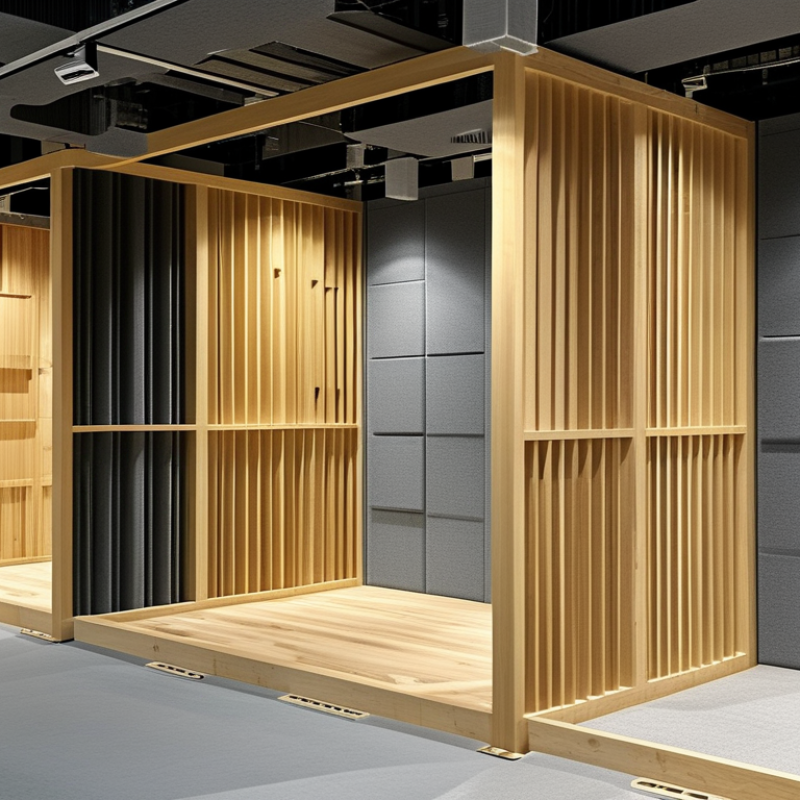
What Sound Insulation Panels Are: Types, Layers, and Core Materials
Sound insulation panels are engineered assemblies that reduce sound transmission between rooms. They do not simply “block all noise.” Their performance depends on frequency, panel thickness, installation quality, and the surrounding wall.
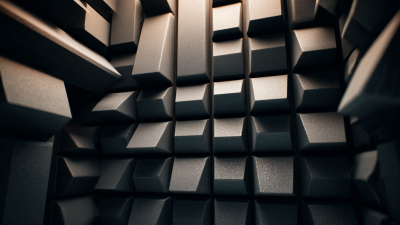
Common panels use porous cores, such as mineral wool, fiberglass, or recycled PET. These materials trap air movement and convert part of the sound energy into small amounts of heat. Foam panels mainly absorb mid and high frequencies. They are useful for echo control, but they usually provide limited protection against bass or noise passing through walls.
Panel construction often includes several layers. A rigid facing protects the surface and can improve durability. The core supplies most of the absorption. Some systems add a dense barrier layer to increase mass, while an air gap helps reduce vibration transfer. Sealed joints matter greatly. A small opening around an electrical box can weaken an otherwise well-built assembly.
In practical room testing, voices may become less sharp after porous panels are installed. Low-frequency footsteps can remain noticeable. That result is easy to misunderstand. Panels should be selected after identifying the noise path, not only the noise source. Check published test data, fire ratings, thickness, and mounting details. Laboratory ratings are useful, but real rooms often perform differently because of flanking paths, doors, ceilings, and imperfect installation.
How Sound Transmission Is Measured: STC, ASTM E90, and ISO 10140
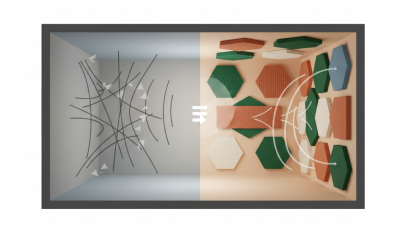
Sound insulation panels reduce airborne noise by adding mass, decoupling layers, or sealing gaps. They are not the same as sound-absorbing panels. Absorbers soften echoes inside a room, while insulation systems limit sound passing through walls, ceilings, and floors. A small unsealed joint can weaken an otherwise strong assembly. Real buildings are rarely perfect.
Sound transmission is measured in controlled laboratories. ASTM E90 measures airborne sound transmission loss across one-third-octave frequency bands, usually from 125 to 4,000 hertz. The result shows how much sound energy a wall or panel blocks at each frequency. ISO 10140 uses a comparable laboratory approach, but its procedures and reporting framework differ. Results should not be treated as interchangeable without checking the test standard.
STC is a single-number rating derived from transmission-loss data under ASTM E413. It emphasizes speech-related frequencies, so a panel may achieve a strong STC while performing poorly against deep bass. That limitation matters in music rooms and mechanical spaces. A 10-point STC difference suggests a meaningful improvement, but it does not guarantee 10 decibels of reduction at every frequency. The U.S. National Institute of Standards and Technology has repeatedly highlighted flanking paths as major causes of field performance loss. The detail is easy to miss. Test reports should identify the specimen, mounting method, frequency data, and laboratory standard. Without those details, the rating may look precise while remaining incomplete.
How Panels Block Noise: Mass, Damping, Decoupling, and the 6-dB Rule
Sound insulation panels reduce sound transmission by combining mass, damping, and decoupling. Mass law is the starting point: doubling a barrier’s surface mass can improve transmission loss by roughly 6 dB at suitable frequencies. Doubling frequency can produce a similar gain. This is a useful engineering rule, not a promise.
Heavy gypsum, cement board, or mineral-based layers resist air movement. Flexible damping compounds convert vibration into small amounts of heat. Decoupled framing creates an air gap, preventing one panel from directly shaking another. A narrow rigid bridge can weaken the entire assembly. Think of footsteps traveling through a metal stud.
Laboratory ratings should be treated carefully. ISO 10140-2 describes how airborne sound insulation is measured, while ISO 717-1 converts results into a single-number rating. These tests do not perfectly reproduce a room with doors, outlets, ducts, and flanking walls. Real performance often falls below the laboratory figure. That gap needs attention.
The 6-dB rule also becomes less reliable near resonance, low bass, and structural connections. A panel may block speech effectively yet allow subwoofer vibrations through the floor. The World Health Organization’s Environmental Noise Guidelines for the European Region recommends indoor night noise below 30 dB(A) in bedrooms. That target shows why small leaks matter. Installers should seal perimeter joints, stagger seams, and verify the complete wall system, rather than trusting panel thickness alone. Measurements can expose uncomfortable mistakes.
How Absorption Differs: NRC Ratings from 0 to 1.00 for Echo Control
Sound insulation panels are often confused with sound absorption panels. They do different jobs. Insulation limits sound passing between rooms, while absorption reduces reflected sound inside one room. A hard wall may block conversation, yet still create a sharp echo. Absorptive panels soften that reflection.
The key measurement is the Noise Reduction Coefficient, or NRC. Under ASTM C423, NRC averages absorption coefficients at 250, 500, 1,000, and 2,000 hertz. The result is rounded to the nearest 0.05. A bare painted wall may approach NRC 0.05. Fibrous acoustic panels commonly test between 0.70 and 1.00, depending on thickness, facing, air space, and installation. NRC 0.00 means almost no measured absorption. NRC 1.00 represents very high absorption within this rating method. It does not mean every frequency disappears.
ISO 354 laboratory testing can produce frequency-specific absorption data, which is more useful than one number. For example, a thin panel may absorb speech frequencies well but perform poorly against deep ventilation noise. Place your hand near a panel edge. A rear air gap can improve low-frequency performance.
ASTM C423 test reports also show why mounting matters; the same material can receive different ratings under different assemblies. That detail is easy to overlook. In real rooms, furniture, ceiling height, panel spacing, and coverage change the result. NRC helps compare products, but it cannot predict silence. It is a starting point, not a promise.
How to Install Panels: Sealing Gaps, Flanking Paths, and STC Performance
Sound insulation panels reduce unwanted noise by adding mass, absorbing vibration, or interrupting sound energy. However, they are not magic barriers. Porous panels mainly control echo inside a room, while dense wall systems help reduce sound transmission. The distinction matters during installation.
Sealing gaps is often the most overlooked step. A narrow opening beside a panel, outlet box, door frame, or ceiling joint can weaken the entire assembly. Use an acoustical sealant around edges, then press panels tightly together. Avoid rigid bridges between opposing wall surfaces. Sound can travel around the panel through studs, ducts, floors, ceilings, and shared service cavities. These are called flanking paths.
ASTM E90 measures laboratory sound transmission, while ASTM E413 converts results into an STC rating. Field performance can be lower because buildings contain imperfect joints and bypass routes. The U.S. Department of Housing and Urban Development’s Noise Guidebook identifies gaps, doors, and mechanical penetrations as common sound-control weaknesses. The World Health Organization recommends indoor bedroom noise below 30 dB(A) at night for good sleep, showing why small leaks matter.
A practical check uses a bright light from the opposite side. If light passes through, sound probably will too. I have found that installers often focus on panel coverage and forget the perimeter. That mistake is easy to make. It is also expensive to correct later. STC ratings remain useful, but they do not fully describe low-frequency noise, impact sounds, or poor site workmanship.
Typical STC Ranges for Wall Assemblies
Sound insulation panels improve performance only when the entire assembly is treated. The representative ranges below show how added insulation, resilient channels, staggered studs, and separated double-stud walls can increase Sound Transmission Class (STC). Seal panel joints, outlets, perimeter edges, and penetrations with an acoustical sealant; gaps and flanking paths can significantly reduce field performance compared with laboratory ratings.