7 Soundproof Box Buying Tips for Better Noise Control?

A soundproof box can make a noisy compressor, pump, or test device easier to live with—but the label alone proves little. Noise changes with distance, frequency, openings, and room conditions. A box that quiets a low hum may do less against a sharp, high-pitched whine. Small details matter: a loose door seal, a blocked vent, or a thin panel can undermine the result.

The stakes are real. The U.S. National Institute for Occupational Safety and Health recommends limiting occupational exposure to 85 dBA over eight hours, using a 3 dB exchange rate. That figure is an exposure guideline, not a promise that any enclosure will make equipment safe. The World Health Organization’s Environmental Noise Guidelines for the European Region also connect prolonged environmental noise with health impacts. These reports help frame the problem; they do not replace measurements at your site. Numbers need context.

Before buying, compare tested sound-reduction data, test conditions, ventilation design, access panels, and the equipment’s heat output. Ask which frequencies were measured and whether the result reflects the complete box, including its door and vents. A single headline dB figure can hide important gaps. Consider footprint and maintenance, too: a tight enclosure may be quiet but awkward to service. It is easy to overlook that trade-off. The seven tips below offer a practical way to judge claims, match a box to its noise source, and avoid paying for performance you cannot verify.
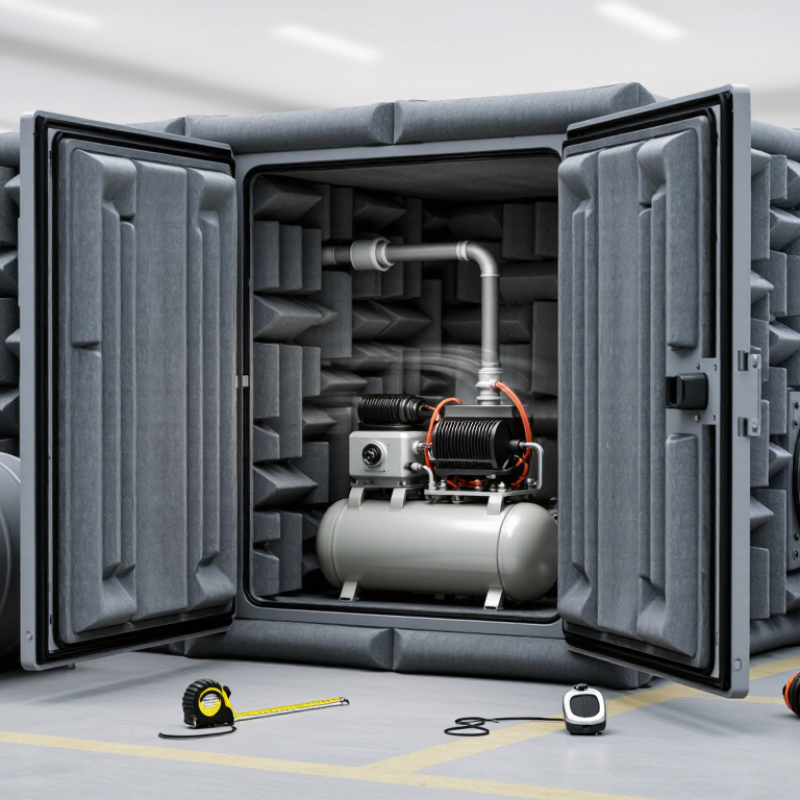
7 Soundproof Box Buying Tips for Better Noise Control?

Measure the Noise First: NIOSH Recommends 85 dBA Over 8 Hours

Before buying a soundproof box, measure the noise from the equipment in its normal operating setup. Use a sound level meter near the worker’s ear position, not only beside the machine. Record the A-weighted level and how long people remain nearby. Small details matter. A reading taken during a quiet cycle may miss the loudest part of the shift.

NIOSH recommends limiting occupational noise exposure to 85 dBA over an eight-hour workday. Its guidance uses a 3 dB exchange rate: each 3 dB increase halves the recommended exposure time. That threshold is a useful planning reference, not a guarantee that every workplace is safe. A calibrated meter gives stronger evidence than a phone app, though even careful measurements can vary with distance and room reflections.

Compare readings before and after placing the equipment inside a box. Check gaps around cables, doors, and ventilation openings; sound can leak through small openings. Measure while the equipment runs at its usual load, then check the area where people actually work. One result may not tell the whole story. I would also note the machine’s cycle and location, because those details are easy to forget later.

Compare Frequency-Band Sound Reduction Using ASTM E90 Test Results

A soundproof box can show a strong single-number rating yet still leak a troublesome low hum. ASTM E90 laboratory reports present sound transmission loss in decibels across frequency bands. Compare matching one-third-octave bands, not just the overall score. For example, check the 125, 250, 500, 1,000, and 2,000 Hz results against your equipment’s dominant noise frequencies. ASTM E413’s STC rating compresses band data into one number, so it cannot reveal every frequency-specific weakness.

Tip: Ask for the complete ASTM E90 test report, including the tested wall build-up, seals, vents, and measurement range. A panel result may not represent a finished box with cable openings or a cooling fan. Small gaps matter. A few millimeters can undermine an otherwise impressive assembly.

Compare boxes tested under the same method and similar conditions. Look for steady improvement across the bands that matter, rather than one unusually high value. Check whether the test included the whole enclosure or only a sample wall; those results answer different questions. ASTM E90 describes laboratory measurement, not guaranteed performance in your room. That distinction is easy to miss. Sources: ASTM E90, Standard Test Method for Laboratory Measurement of Airborne Sound Transmission Loss of Building Partitions and Elements; ASTM E413, Classification for Rating Sound Insulation.

Check Absorption Claims: ASTM C423 NRC Averages 250–2,000 Hz

When comparing a soundproof box, treat its NRC as an absorption clue, not a promise of silence. Under ASTM C423, absorption is measured in a reverberation room. The Noise Reduction Coefficient averages results at 250, 500, 1,000, and 2,000 Hz, then reports a rounded value. That range covers many voices and machine sounds, but it does not describe every frequency.

Check the actual test report. Ask whether the tested sample matches the box’s materials, thickness, and installation. A loose panel in a lab may perform differently from a panel fitted tightly inside a small enclosure. NRC also does not tell you how much sound passes through walls, seams, or ventilation openings. It is not a decibel-reduction rating. Not quite.

For a box near a humming pump, low-frequency noise below 250 Hz may matter more than the NRC suggests. Listen for rattling seams, inspect door seals, and consider whether airflow openings create sound leaks. I would compare NRC alongside transmission-loss data, if available, and the test conditions. One number helps, but it cannot settle the whole decision.

Assess Seals and Ventilation Without Exceeding OSHA’s 90 dBA 8-Hour Limit

A soundproof box works only as well as its weakest gap. Check the door seal for cracks, flattening, or spots where light shows through. Close the latch and slide a strip of paper around the edge; uneven resistance can reveal poor contact. Seals should compress firmly without making the door difficult to open. Ventilation matters, too. Small, lined baffles can reduce direct sound paths, but undersized vents may trap heat around equipment.

Tips: Test seals with a paper strip. Keep vents clear. Recheck after maintenance. A quiet box is not automatically a safe workplace.

Measure noise where a worker stands, using a suitable sound-level meter or personal dosimeter over the actual work shift. OSHA’s 90 dBA limit applies to an eight-hour time-weighted exposure, not a quick reading at the box opening. Exposure can rise when several machines run together. NIOSH recommends a more protective 85 dBA exposure limit, so treating 90 dBA as a design goal leaves little margin. If readings approach either level, improve the enclosure and reassess exposure; do not rely on seals alone. Some setups are harder to judge than they look.

Verify Installed Noise Reduction, Access, and Maintenance Requirements

A soundproof box should be judged by its installed performance, not only by a laboratory rating. Ask for the test method, frequency-band results, and the operating conditions used. ISO 11957 describes measurement and evaluation of cabin sound insulation, but site conditions can differ from controlled tests. Verify the finished installation with comparable before-and-after measurements, at the same machine load and microphone positions. Check low-frequency noise separately; a single overall figure may hide it. Small gaps matter.

Access affects whether the box stays effective. Open the doors and inspect hinges, seals, cable entries, and ventilation paths. A seal that looks minor can become a leak after repeated use. Plan how technicians will reach filters, controls, and service points without removing panels or leaving doors open during operation. NIOSH’s Criteria for a Recommended Standard: Occupational Noise Exposure sets an 85 dBA recommended exposure limit for an eight-hour workday, using a 3 dB exchange rate. That benchmark helps frame worker exposure, but it does not replace a site-specific assessment. Keep records of measurements and repairs. Honestly, maintenance access is easy to overlook during purchasing; it can make the difference between a rated enclosure and one that still controls noise months later.

Soundproof Box Buying: Verify Installed Noise Reduction

The chart shows the theoretical sound energy remaining after different noise reductions, calculated using 10−reduction (dB)/10. These are mathematical reference values, not product ratings or guaranteed installed results.

Before buying, ask how noise reduction will be verified after installation. Compare sound levels inside and outside under the same operating conditions, and check that doors, cable entries, ventilation openings, and service panels can be sealed and maintained.