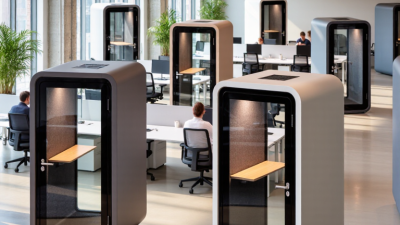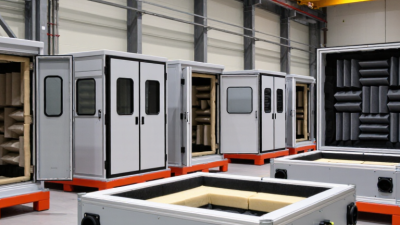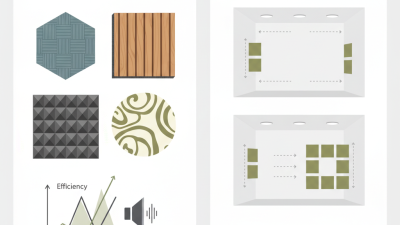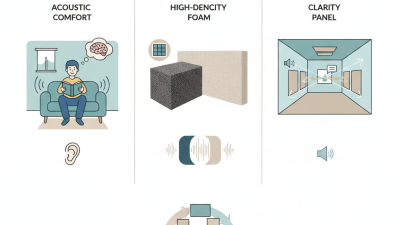
How to Choose the Best Soundproof Booth?

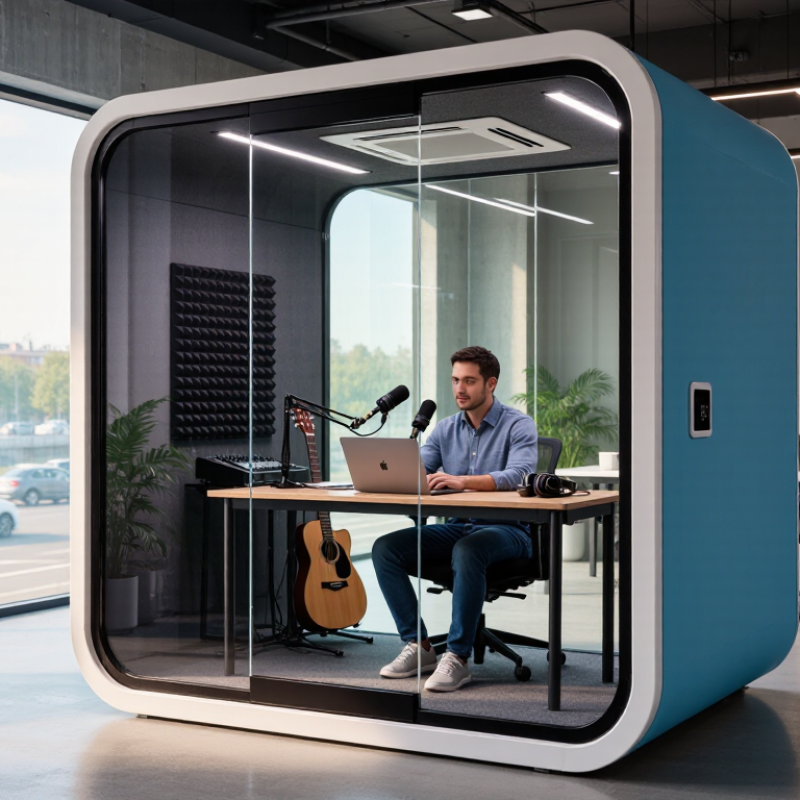
Choosing the best soundproof booth requires more than comparing wall thickness or attractive product photos. A suitable soundproof booth should match your actual work. A podcast host needs controlled voice clarity. A musician may need stronger low-frequency isolation. A remote employee may value ventilation, lighting, and comfort during long meetings.

John Storyk, an acoustics architect and co-founder of Walters-Storyk Design Group, has emphasized this principle: “Acoustics is about creating an environment that supports the intended use.” That idea matters here. A booth can block outside traffic, yet still sound uncomfortable inside. It may have excellent seals, but poor airflow. It may look compact, but feel restrictive after forty minutes.

Look closely at the details. Check the tested sound transmission rating, door seals, panel construction, ventilation noise, and internal reverberation. Ask whether performance data comes from independent testing. Marketing language is not evidence. A heavy door alone does not create reliable isolation. The room’s floor, ceiling, and surrounding walls also influence results.

Think about the real setting.

Will the booth stand beside a busy road? Will several people use it daily? Can its ventilation operate without a constant hum? These questions reveal practical weaknesses early. I have seen buyers focus on decibel claims and overlook chair space, cable access, or emergency visibility. That is an easy mistake.

The best choice balances isolation, acoustic treatment, safety, comfort, maintenance, and budget. No booth is perfect. The goal is a dependable workspace that performs honestly in your environment.
How to Choose the Best Soundproof Booth?

Define Your Soundproof Booth Needs and Intended Use

How to Choose the Best Soundproof Booth?

Before comparing materials or prices, define what the booth must do. A booth for video calls has different needs than one for vocal recording. Identify the sound source, user count, session length, and surrounding noise. Keep it practical.

For speech, clear voice transmission and low echo may matter most. For recording, stronger isolation and controlled acoustics become more important. Measure your equipment, chair, microphone stand, and movement space. A narrow booth can look efficient, but cramped sessions quickly become uncomfortable. Allow room for ventilation, lighting, and cable access. Do not ignore heat. A quiet booth with poor airflow is difficult to use for long periods.

Consider where the booth will stand. A busy office, workshop, and apartment create different challenges. Doors, seals, wall joints, and floor contact often affect performance more than attractive interior panels. Check the booth’s tested sound reduction data, but treat laboratory figures carefully. Real results can change after installation. One overlooked weakness is usually enough. I have seen users choose a booth for occasional calls, then expect studio-level isolation later. That mismatch costs money. Reconsider future use before ordering. Will the user record louder audio? Will another person share the space? A simple needs list, room measurement, and trial of the working posture can reveal problems that specifications hide.

Assess Soundproofing Performance and Acoustic Specifications

Choosing the best soundproof booth starts with verified acoustic performance, not appearance. Sound absorption reduces echo inside the booth, while sound insulation limits noise entering or leaving it. These are different functions. Ask for an independent test report based on ISO 23351-1, which measures speech level reduction. Under this standard, a speech reduction above 30 dB reaches the highest A+ class. However, a single dB figure can mislead. Performance may drop at low frequencies, where traffic, ventilation, and machinery often create the most disturbance.

Review the full frequency-range graph, not only the headline result. A reliable specification should show results at 125, 250, 500, 1,000, 2,000, and 4,000 Hz. Check the booth’s internal background noise too. A quiet fan rated near NC 25 may support clearer calls than a louder system, even when wall insulation looks impressive. The European Environment Agency’s Environmental Noise in Europe 2020 report estimated that at least 113 million people experienced road traffic noise above 55 dB Lden. That figure explains why low-frequency isolation deserves practical attention. In my experience, door seals and cable openings often become weak points. They are easy to overlook. Request installation details, tested dimensions, ventilation conditions, and maintenance requirements. I would also test the booth after installation, because laboratory results may not survive an uneven floor, poorly aligned door, or crowded office.

How to Choose the Best Soundproof Booth?

Assess soundproofing performance by reviewing airborne sound reduction across octave bands. Higher attenuation values generally indicate better isolation, especially in the speech-frequency range from 250 Hz to 2,000 Hz.

The chart presents realistic engineering reference targets for booth selection, not measurements from a specific manufacturer. Request laboratory test reports based on recognized methods such as ISO 10140 or ASTM E90, and check installation conditions before making a final comparison.

Compare Booth Sizes, Layouts, Ventilation, and User Comfort

When choosing a soundproof booth, start with the user and the task. A solo voice booth needs less floor space than a booth for two people. Measure the chair, desk, microphone stand, and door clearance together. A narrow booth may save space, but it can make movement awkward. For one speaker, a compact rectangular layout often works well. For interviews, extra width prevents elbows from touching. Do not judge by exterior size alone.

Ventilation affects both recording quality and user comfort. Look for quiet fans, insulated air ducts, and adjustable airflow. A booth that feels warm after ten minutes will not support a long session. Listen for fan noise during a silent recording. Also check whether fresh air reaches the seated user, rather than circulating near the ceiling. I once overvalued thick wall panels and ignored airflow. That choice looked efficient on paper, but the room became uncomfortable quickly.

User comfort includes lighting, seat height, cable access, and visual space. A small window can reduce the feeling of isolation. Soft interior surfaces should control echoes without making the booth feel cramped. Leave enough room to adjust posture and read notes naturally. If several users share the booth, test the layout with real equipment. Paper measurements can mislead. A booth should feel quiet, usable, and physically sustainable throughout the intended session.

How to Choose the Best Soundproof Booth? - Compare Booth Sizes, Layouts, Ventilation, and User Comfort

Comparison Dimension Compact Solo Booth Standard Solo Booth Two-Person Booth Meeting Booth
Recommended Use Short private calls, focused work, and voice messages Regular video meetings, interviews, and concentrated work Two-person calls, interviews, coaching, and collaborative work Small meetings, presentations, training sessions, and collaborative discussions
Typical User Capacity 1 user
Designed for brief sessions and limited personal equipment
1 user
More suitable for extended work and professional video calls
2 users
Allows two chairs or a compact face-to-face arrangement
3–4 users
Suitable for seated meetings with a compact table
Typical Internal Footprint Approximately 1.0–1.2 m × 1.0–1.2 m
(3.3–3.9 ft × 3.3–3.9 ft)
Approximately 1.2–1.5 m × 1.2–1.5 m
(3.9–4.9 ft × 3.9–4.9 ft)
Approximately 1.5–1.8 m × 1.5–1.8 m
(4.9–5.9 ft × 4.9–5.9 ft)
Approximately 1.8–2.4 m × 1.8–2.4 m
(5.9–7.9 ft × 5.9–7.9 ft)
Typical Internal Height About 2.1–2.3 m
(6.9–7.5 ft)
About 2.1–2.4 m
(6.9–7.9 ft)
About 2.1–2.4 m
(6.9–7.9 ft)
About 2.1–2.4 m
(6.9–7.9 ft)
Best Layout Single seat facing a desk, microphone, or camera Desk-and-chair layout with space for a monitor, camera, and personal storage Two chairs facing each other or a small shared desk Compact central table, perimeter seating, or U-shaped discussion layout
Space Planning Requirement Allow enough exterior clearance for the door, user movement, and maintenance access Allow approximately 0.75–0.90 m (2.5–3.0 ft) of clear access outside the entrance where possible Provide additional clearance for two users entering, exiting, and adjusting seating Plan wider circulation paths and confirm that the floor can support the larger enclosure
Ventilation Approach Low-noise supply and exhaust fans with acoustic duct treatment Continuous mechanical ventilation with filtered air and quiet fan control Higher airflow capacity because two occupants produce more heat and carbon dioxide Highest airflow demand; use independently controlled supply and exhaust ventilation
Practical Ventilation Target Provide outdoor air suitable for one occupant and verify that the booth does not become stuffy during normal use Use a ventilation design based on occupancy, booth volume, local code, and indoor-air-quality requirements Size airflow for two occupants rather than simply doubling the fan noise level Use occupancy-based control or a higher continuous airflow setting for meetings lasting longer than brief calls
Noise Considerations Prioritize quiet fans, sealed door gaskets, and vibration isolation because small spaces make equipment noise more noticeable Look for independently tested sound-isolation data and a low internal noise level from the ventilation system Use balanced airflow, soft interior finishes, and adequate speech absorption to reduce reverberation Specify acoustic treatment for both sound isolation and speech clarity; larger volumes can require more absorption
Expected User Comfort Comfortable for short sessions; limited room for posture changes and accessories Better for longer calls because it provides more legroom, equipment space, and seating flexibility Comfort depends strongly on seating width, air movement, and the distance between users Most comfortable for group interaction, provided ventilation, lighting, and circulation are properly sized
Lighting Recommendation Diffused overhead LED lighting with minimal glare on the camera Adjustable, diffuse lighting positioned to illuminate the user's face evenly Even front lighting for both users, with controls that avoid shadows and screen reflections Multiple diffuse fixtures or adjustable lighting zones for faces, tables, and presentation surfaces
Furniture and Equipment Compact seat, narrow shelf, laptop stand, and small microphone or camera Ergonomic chair, work surface, monitor, camera, power outlets, and cable management Two ergonomic seats, shared work surface, two microphones or a conference microphone, and power access Meeting table, multiple seats, display or camera system, power outlets, and organized cable routing
Accessibility Check May be unsuitable for wheelchair turning space or assisted entry; verify dimensions before purchase Check clear door width, threshold height, turning space, and reach ranges against applicable accessibility requirements More adaptable than compact booths, but the entrance and interior turning radius still require verification Generally offers the greatest planning flexibility; confirm accessible routes, door clearances, and seating positions
Best Choice When... Floor area is limited and calls are usually short One person needs a practical booth for frequent calls or focused work Two people regularly need private conversations without occupying a full meeting room Several users need a private, acoustically controlled space for recurring meetings

Note: Dimensions and ventilation descriptions are typical planning ranges, not universal specifications. Final selection should be checked against local building, fire-safety, accessibility, electrical, and indoor-air-quality requirements. Sound-isolation performance should be compared only when test methods and ratings are equivalent.

Review Materials, Technology, Accessibility, and Safety Features

How to Choose the Best Soundproof Booth?

Material selection should begin with verified acoustic performance, not appearance. Dense panels, sealed doors, laminated glass, and resilient floor layers can reduce sound leakage. However, thick walls alone cannot fix weak joints. ISO 23351-1:2020 measures speech level reduction in decibels, so request a complete test report. A booth rated at 30 dB may perform differently in a busy office. Installation quality matters greatly.

Technology should support clear communication without creating new distractions. Check ventilation noise, microphone compatibility, lighting, power access, and temperature control. The World Health Organization recommends indoor night noise below 30 dB(A) for good sleep, although a workplace booth has different requirements. Still, excessive fan noise can damage concentration. I have seen attractive booths with poor airflow. That mistake is easy to overlook.

Accessibility and safety deserve equal attention. The entrance should allow comfortable wheelchair access, with low-force hardware and enough turning space. Controls should be reachable, visible, and usable without fine hand movement. Check emergency release mechanisms, fire performance documents, air exchange rates, and electrical certification. NIOSH identifies 85 dBA over an eight-hour workday as a recommended exposure limit, so booth equipment should not approach that level. Ask for measured data, not vague claims. A practical trial also reveals problems that laboratory testing misses, such as glare, cramped knees, or difficult cleaning. Industry reports can guide decisions, but direct inspection remains essential.

Evaluate Installation, Maintenance, Budget, and Long-Term Value

Choosing the best soundproof booth requires more than comparing panel thickness and advertised decibel ratings. Installation affects performance immediately. Measure doorways, ceiling height, floor strength, and available power before ordering. A booth that barely fits may become expensive to position. Leave space around ventilation equipment for airflow and future servicing. Local building and electrical requirements should also guide the installation plan.

Maintenance is easy to underestimate. Inspect door seals every few months, especially if the booth is used daily. Dust the ventilation grilles and check for unusual fan noise. A damaged seal can reduce isolation more than expected. Keep a simple maintenance record with dates, repairs, and filter changes. Small details matter here. Ignore them, and comfort may decline quietly.

Budget planning should include delivery, assembly, acoustic testing, electrical work, and replacement parts. The purchase price is only the opening figure. A cheaper booth may seem sensible on paper, but that judgment can age badly if it needs frequent repairs. Consider energy use, expected working hours, warranty terms, and how easily the booth can be relocated. A modular design may cost more initially, yet reduce disruption during an office move. Still, long-term value is not guaranteed by a high price. Compare measurable performance, service access, material durability, and user comfort over several years. A booth that protects hearing, concentration, and recorded sound may justify its cost more clearly than one with impressive specifications alone.